
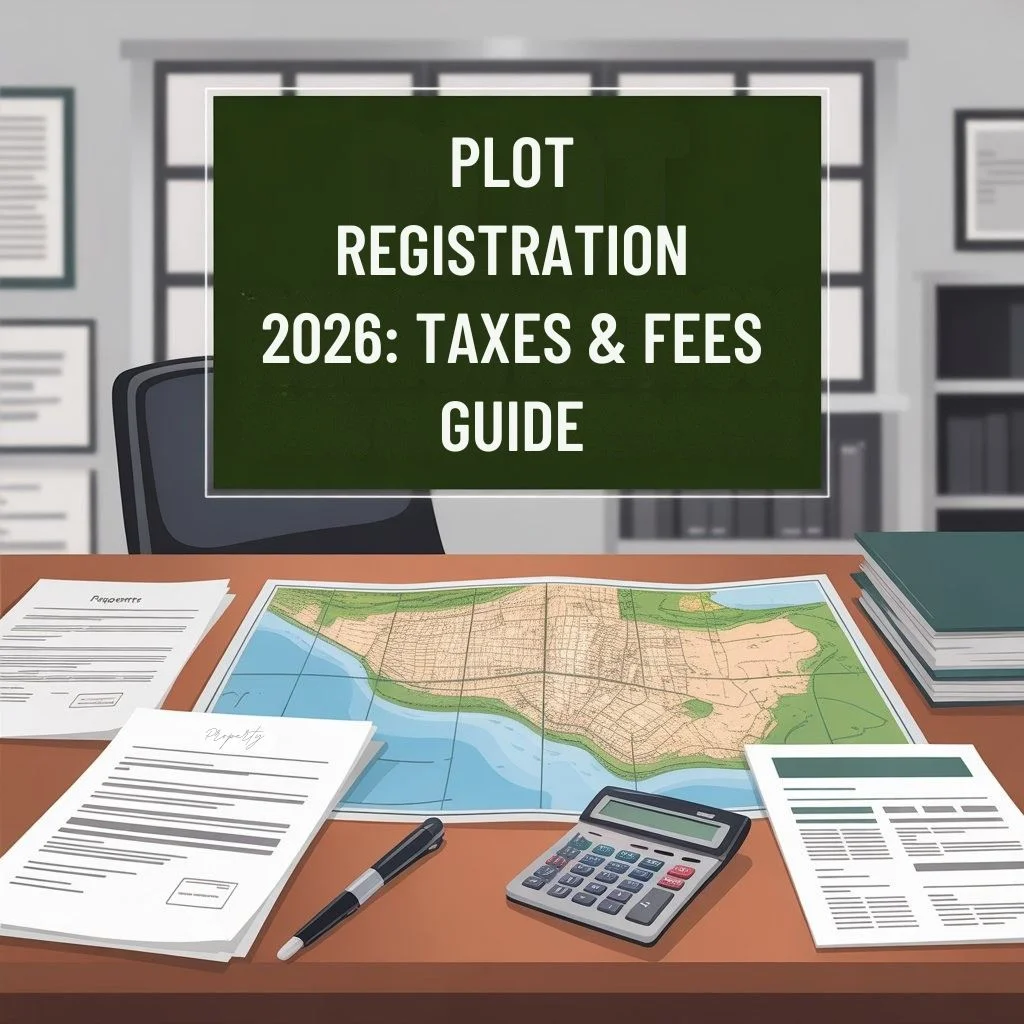
Buying a land plot in Pakistan can be an exciting investment, but understanding the plot registration process in Pakistan is essential for every buyer. The year 2026 has brought updates in property tax Pakistan, land registration tax, and associated fees that investors must know before proceeding. This guide will cover all aspects, from registration fees to stamp duty Pakistan, FBR land tax, and the complete step-by-step procedure to register a property safely.
Understanding Property Registration in Pakistan
The property registration process step by step is now streamlined with updated rules from the Federal Board of Revenue (FBR). Whether you are buying residential, commercial, or agricultural land, you are required to pay various taxes and follow legal procedures to avoid future disputes. In 2026, buyers must comply with registration fees, Capital Value Tax (CVT), and other levies to ensure that the ownership transfer is valid and legally enforceable.
Key Taxes on Land in Pakistan 2026
1. Advance Tax on Property Sale
One of the first steps in the plot registration tax and fees Pakistan 2026 is paying the advance tax on property sale. According to FBR guidelines, this tax depends on your tax-filer status. Tax filers pay lower rates, while non-filers are subjected to higher charges. This ensures compliance under Section 236K, which applies to buyers of land plots.
2. Stamp Duty & Municipal Levies
The stamp duty Pakistan is mandatory and must be paid via e-stamp for sale deed. The rate varies according to province and plot value. Additionally, municipal levies cover services like road maintenance, library fees, and city development charges. These are typically calculated as a percentage of the declared property value and are crucial for the property registration process Pakistan.
3. Capital Value Tax (CVT)
The Capital Value Tax is part of the property taxes 2026 and applies on property transactions above a certain threshold. CVT is collected at the time of registration and ensures the government receives a fair share from real estate deals. Combining TIP tax, stamp duty, and CVT forms the total taxation for plot registration.
4. Transfer of Immovable Property (TIP) Tax
The TIP tax is a provincial requirement applied to both residential and commercial property transfers. Rates range from 1% to 3% depending on the municipality. This is a crucial component of the land registration charges in Punjab and other provinces and must be paid before submitting the registry application.
Step-by-Step Land Registration Process in Pakistan
Step 1: Obtain Fard & Verify Title
Before any transaction, acquire the Fard & title verification from the land registry process Pakistan. The Fard serves as proof of ownership and is required for submitting the property registration process documents. Verifying ownership ensures that the plot is free from disputes or previous claims.
Step 2: Pay Required Taxes & Fees
Next, settle all registration fee Punjab, advance tax on property sale, stamp duty & municipal levies, TIP tax, and Capital Value Tax (CVT). Payments can be made through banks or online portals where available. Retain all receipts to present at the sub-registrar’s office.
Step 3: Prepare the Sale Deed
The sale deed must be drafted on e-stamp paper reflecting the property value. This document confirms the transfer of ownership and should include details such as plot number, location, buyer, seller, and agreed price. Legal assistance is recommended to prevent future disputes during land registration Pakistan.
Step 4: Submit Documents to Sub-Registrar
Submit all documents, including the Fard, tax receipts, e-stamped sale deed, and CNIC copies of buyer and seller, to the sub-registrar office. This ensures the real estate registration fees and legal requirements are properly recorded. The sub-registrar updates the official records to reflect the new ownership.
Step 5: Mutation & Record Update
After approval, the mutation charges are applied, and ownership is officially updated in the local land records. This step completes the property transfer charges Pakistan process and protects your investment legally.
E-Registration and Digital Reforms
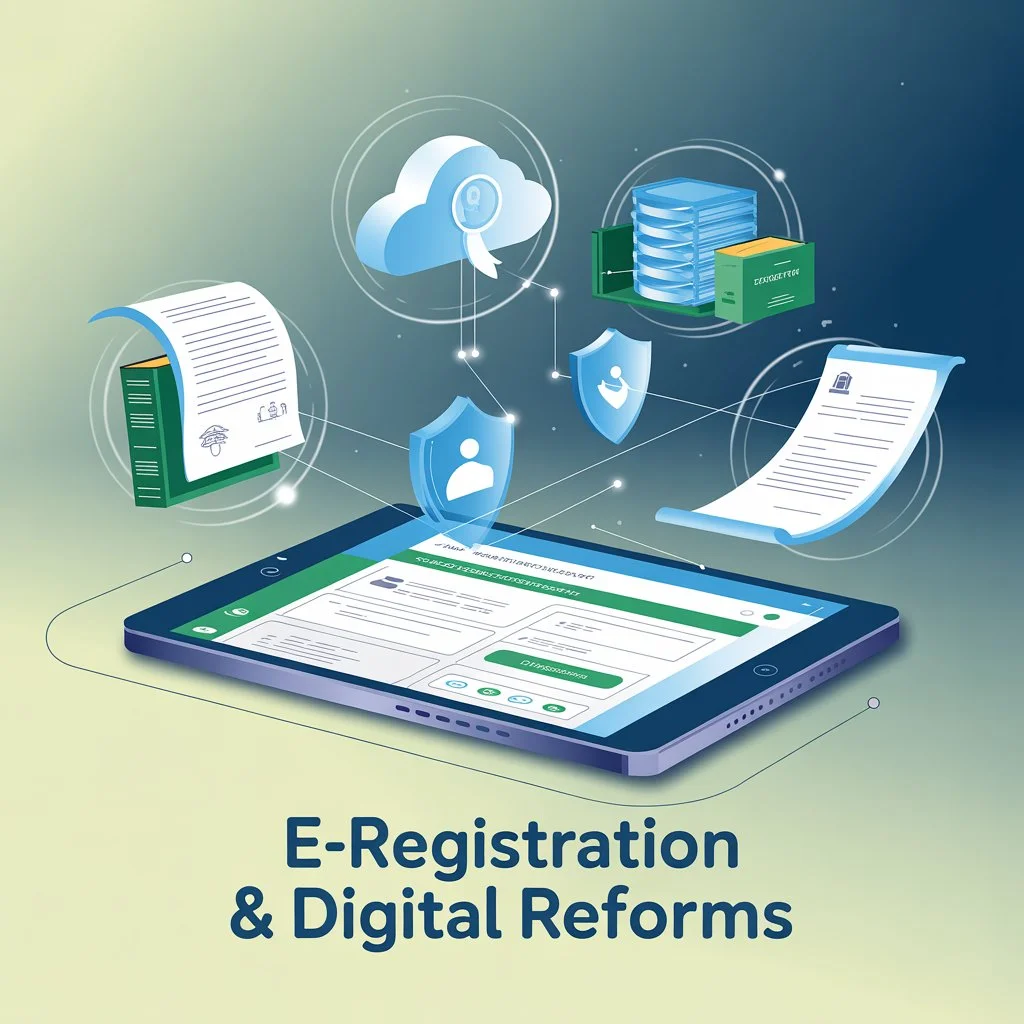
In 2026, Pakistan is promoting e-registration land process Pakistan to reduce fraud and streamline property registration. Digital systems allow buyers to submit documents online, track application status, and verify provincial registry authorities approvals. Provinces like Punjab have introduced e-registration system to minimize errors, eliminate manipulation by traditional patwaris, and enable same-day registration if documents are complete.
The e-registration system enhances transparency, secures data, and ensures all property tax budget changes and levies are correctly applied. Buyers can now avoid common issues such as fake property files or incomplete transactions.
Provincial Differences in Land Registration
The land registration charges and process may vary across Pakistan:
- Punjab: TIP tax 1–3%, stamp duty up to 7%, mutation charges applied post-registration.
- Sindh: Moving towards full e-registration system, with strict verification of title.
- Khyber Pakhtunkhwa & Balochistan: Stamp duty and municipal levies are calculated based on declared property value.
Understanding these differences is essential for anyone following the Pakistan land registry process 2026.
Tips for Buyers and Investors
- Always check DC value vs market value to calculate taxes accurately.
- Verify the plot through Fard & title verification before paying any fees.
- Use official channels for paying registration fee Punjab, stamp duty Pakistan, and TIP tax.
- Maintain records of all receipts and e-stamp documents to avoid legal issues.
Prefer FBR property tax 236K guide compliance for tax benefits and reduced rates.
Conclusion
The plot registration in Pakistan 2026 requires careful attention to taxes on land purchase Pakistan 2026, fees, and proper documentation. From advance tax on property sale to stamp duty, TIP tax, Capital Value Tax (CVT), and digital e-registration system, following the process step by step ensures a secure investment. By complying with FBR land tax, property registration charges, and provincial regulations, buyers and investors can protect their property rights and avoid legal complications.
Investing in a plot in Pakistan is lucrative, but it’s crucial to follow the property registration process step by step, pay all applicable registration fees and taxes, and leverage the e-registration land process Pakistan to simplify your transaction. This guide ensures that buyers are fully informed of plot registration tax and fees Pakistan 2026, making the real estate purchase safe, transparent, and legally compliant.
Want to know more? Check out How to Verify a Housing Scheme Before Investing Safely
Like, share and comment: Facebook, Instagram, Youtube and TikTok.



Join The Discussion