

The real estate sector in Pakistan has always been closely linked with government tax policies, and any change in taxation laws directly affects property prices, investor confidence, and market activity. One of the most discussed topics in recent years has been FCC Section 7E update 2026 Faisalabad, especially in relation to Section 7E of the Income Tax Ordinance, which introduced a “deemed income tax” on immovable property.
In 2026, the discussion around this law gained new attention after recent court-level developments from the FCC (Federal Constitutional Court), leading to major debates in the real estate community. Property owners in Faisalabad, along with investors across Pakistan, are now closely analyzing how this update may reshape investment strategies and market trends.
This article explains the FCC Section 7E update 2026 and its practical impact on property owners in Faisalabad in a simple and informative way.
Understanding Section 7E and Its Purpose
Section 7E was originally introduced as part of tax reforms aimed at expanding Pakistan’s tax base. The law focused on taxing “deemed income” from immovable property, meaning that even if a property was not generating rental income, it was still considered taxable based on its value.
The idea behind this policy was to:
- Increase tax compliance in the real estate sector
- Bring non-active property investors into the tax net
- Generate additional revenue for the government
However, over time, this provision became controversial. Many investors argued that it placed an unfair burden on property holders, especially those who owned plots or houses for long-term investment rather than rental income.
FCC Section 7E Update 2026: What Has Changed?
The FCC Section 7E update 2026 refers to recent legal developments where the court reviewed the constitutional validity of the law. According to legal discussions and market reports, the court has raised serious questions about the structure and application of deemed income tax on immovable property.
As a result, uncertainty around Section 7E has significantly reduced its practical enforcement. Many tax experts and real estate analysts now consider the law either suspended in effect or no longer actively enforceable in its previous form.
This update has created a strong reaction in the property market, especially in urban investment hubs like Faisalabad.
Impact on Property Owners in Faisalabad
Faisalabad is one of Pakistan’s fastest-growing real estate markets, driven by industrial expansion, housing demand, and increasing urbanization. The FCC update regarding Section 7E has several important implications for local property owners.
1. Increased Investor Confidence
One of the most immediate impacts has been improved investor sentiment. Previously, many buyers were hesitant to hold multiple properties due to additional tax pressure. With the uncertainty around Section 7E reduced, investors are now more confident in long-term property holding.
This is particularly important in Faisalabad, where land banking and plot investment are common strategies.
2. Lower Holding Cost Pressure
Property owners often calculate “holding cost” before making investment decisions. Section 7E was considered an added cost because it created a tax liability even without rental income.
With the latest update, many investors feel that the financial burden on idle properties has eased. This encourages both small and large investors to retain properties for longer periods, expecting future capital gains.
3. Positive Effect on Property Transactions
Real estate agents in Faisalabad have reported a gradual increase in inquiries and transactions following the legal developments. Buyers who were previously waiting for tax clarity are now re-entering the market.
This improved activity is seen in:
- Residential plots
- Commercial plots
- Housing society investments
The market is slowly shifting toward a more active and confident phase.
4. Boost for Housing Societies
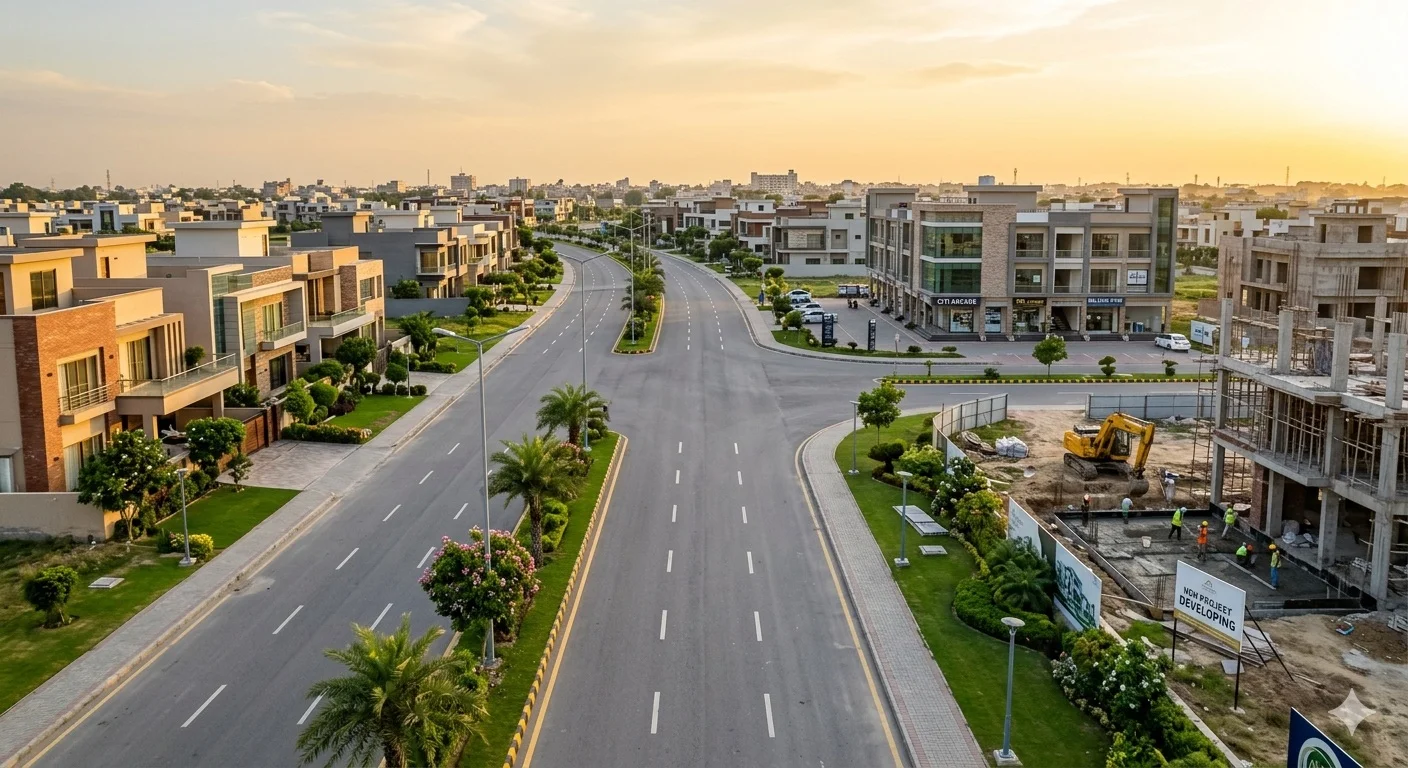
Housing societies in Faisalabad benefit directly from stable tax policies. With reduced fear of additional taxation, developers and investors are showing renewed interest in ongoing and new projects.
This may also lead to:
- Faster project launches
- Increased booking rates
- Improved installment plan investments
5. Long-Term Investment Growth
Real estate in Faisalabad has always attracted long-term investors. The Section 7E update supports this trend by making long-term holding more attractive again.
Investors now see real estate as:
- More stable compared to short-term financial assets
- Less affected by aggressive taxation
- Better for capital appreciation over time
Broader Impact on Pakistan’s Real Estate Market
While Faisalabad is a key focus, the effects of the FCC Section 7E update are visible across Pakistan. Cities like Lahore, Karachi, and Islamabad are also experiencing improved market sentiment.
Key nationwide effects include:
- Revival of investor trust in real estate
- Increased focus on property development projects
- Reduced fear of sudden tax changes
- Better market liquidity
However, experts also suggest that the government may introduce alternative tax reforms in the future to balance revenue collection and investor concerns.
What Property Owners Should Expect Next
Although the current situation appears favorable for investors, the real estate sector should remain aware of possible policy changes. Governments often revise tax structures based on economic needs.
Property owners in Faisalabad should:
- Stay updated with FBR announcements
- Consult tax advisors before major investments
- Focus on legal and approved housing schemes
- Plan long-term rather than speculative investments
Conclusion
The FCC Section 7E update 2026 has created a significant shift in Pakistan’s real estate landscape. For property owners in Faisalabad, it has brought relief, improved investor confidence, and renewed interest in the property market.
While the long-term regulatory framework may continue to evolve, the current environment is clearly more favorable for property investment compared to previous years. Faisalabad’s real estate sector is expected to benefit from increased activity, stronger demand, and improved market stability.
For investors and buyers, this is an important time to reassess opportunities, especially in well-planned housing societies and developing commercial zones.
Want to know more? Check out FBR AI Tax Monitoring System in Pakistan: Impact on Property Investors
Like, share and comment: Facebook, Instagram, Youtube and TikTok.




Join The Discussion