
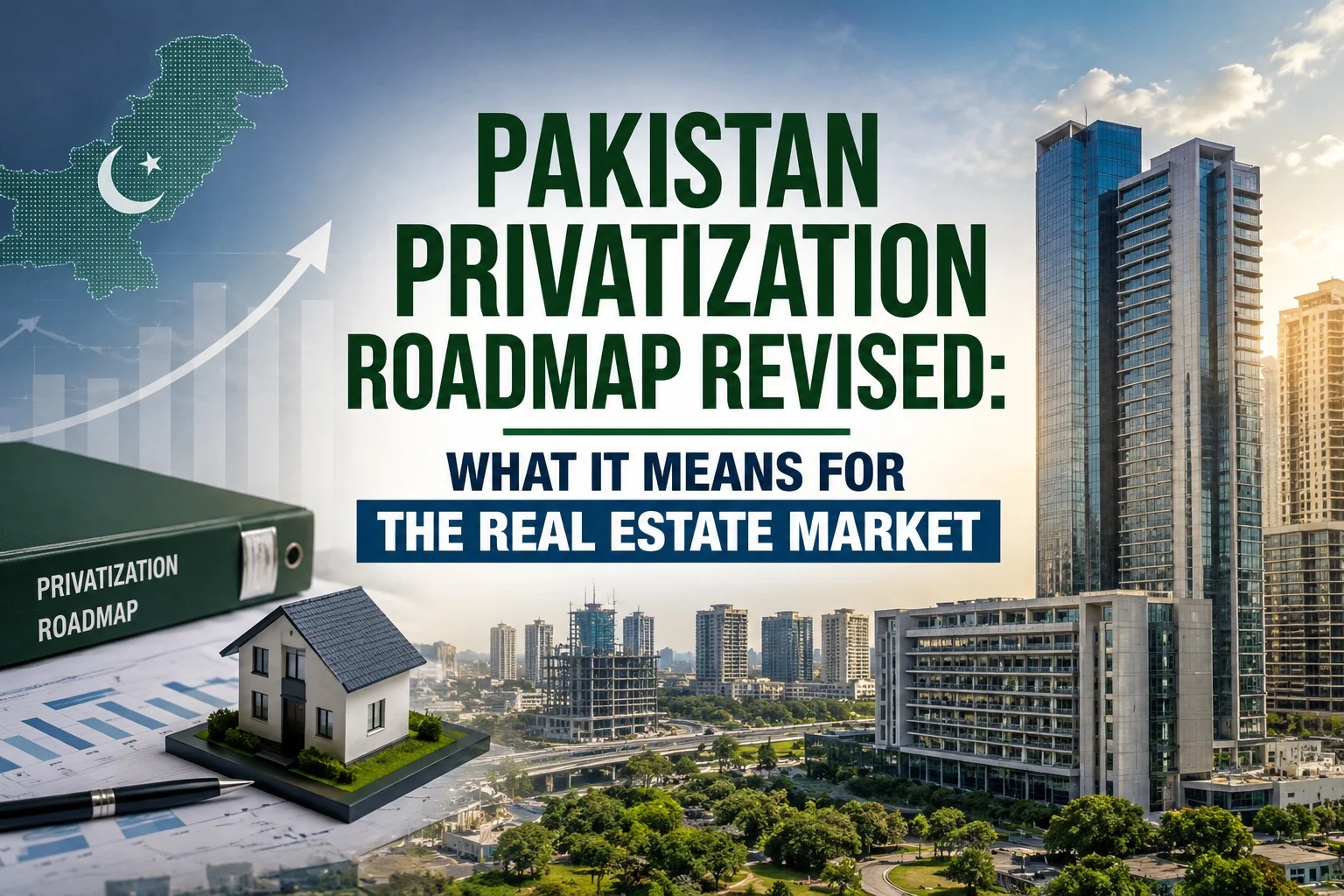
Pakistan’s revised Pakistan Privatization Roadmap has once again brought economic reforms into the spotlight. As the government accelerates plans to privatize selected state-owned enterprises (SOEs), investors, businesses, and property buyers are evaluating how these changes could influence the country’s economy. While privatization primarily focuses on improving the efficiency of public assets and attracting investment, its effects often extend to the Pakistan real estate market as well.
For property investors, understanding the relationship between economic reforms and real estate trends is essential. A stronger investment climate, increased business activity, and improved infrastructure can create new opportunities for residential, commercial, and industrial property development. This article explains what Pakistan’s revised privatization roadmap involves and how it may impact the real estate sector in the coming years.
Understanding Pakistan’s Revised Privatization Roadmap
The government’s revised privatization roadmap outlines plans to transfer the ownership or management of selected public sector enterprises to private investors. The objective is to reduce the financial burden of loss-making organizations, improve operational efficiency, encourage competition, and attract both domestic and foreign investment.
Privatization is also part of Pakistan’s broader economic reform strategy aimed at strengthening fiscal stability, improving public finances, and creating a more business-friendly environment. By allowing private companies to manage certain industries, the government hopes to stimulate economic growth while focusing public resources on essential services.
Although the roadmap mainly targets state-owned enterprises, its impact is expected to extend across multiple sectors, including construction, infrastructure, manufacturing, banking, and real estate.
Why Privatization Matters for the Real Estate Market
The Pakistan privatization roadmap is more than an economic policy it can influence investor confidence, business expansion, and urban development. These factors directly affect demand for land, housing, commercial properties, and industrial facilities.
When businesses invest in expanding operations, they require offices, warehouses, factories, employee housing, and commercial spaces. As demand for these properties increases, surrounding areas often experience higher property values and increased development activity.
Similarly, successful privatization can encourage long-term investment, leading to new infrastructure projects that improve connectivity and make certain locations more attractive for property investment.
Increased Investor Confidence
One of the most significant benefits of economic reforms is the improvement of investor confidence. Domestic investors usually prefer markets where government policies remain consistent and encourage private sector participation.
A transparent privatization process can signal that Pakistan is committed to improving its investment climate. This confidence may encourage developers, builders, and institutional investors to launch new housing schemes, commercial centers, and mixed-use developments.
Foreign investors also closely monitor government reforms before entering emerging markets. If privatization strengthens economic stability, international investment in real estate projects may gradually increase.
Potential Growth in Commercial Real Estate
Commercial real estate is likely to benefit the most from increased private sector activity. As privatized companies improve operations or expand into new markets, demand for modern office buildings, retail outlets, logistics centers, and business parks may grow.
Cities with expanding business districts could witness higher demand for commercial plots and office spaces. Developers may also introduce more mixed-use projects that combine residential, retail, and office facilities to meet changing market needs.
Improved commercial activity often creates employment opportunities, which further increases demand for nearby residential communities.
Infrastructure Development Supports Property Values
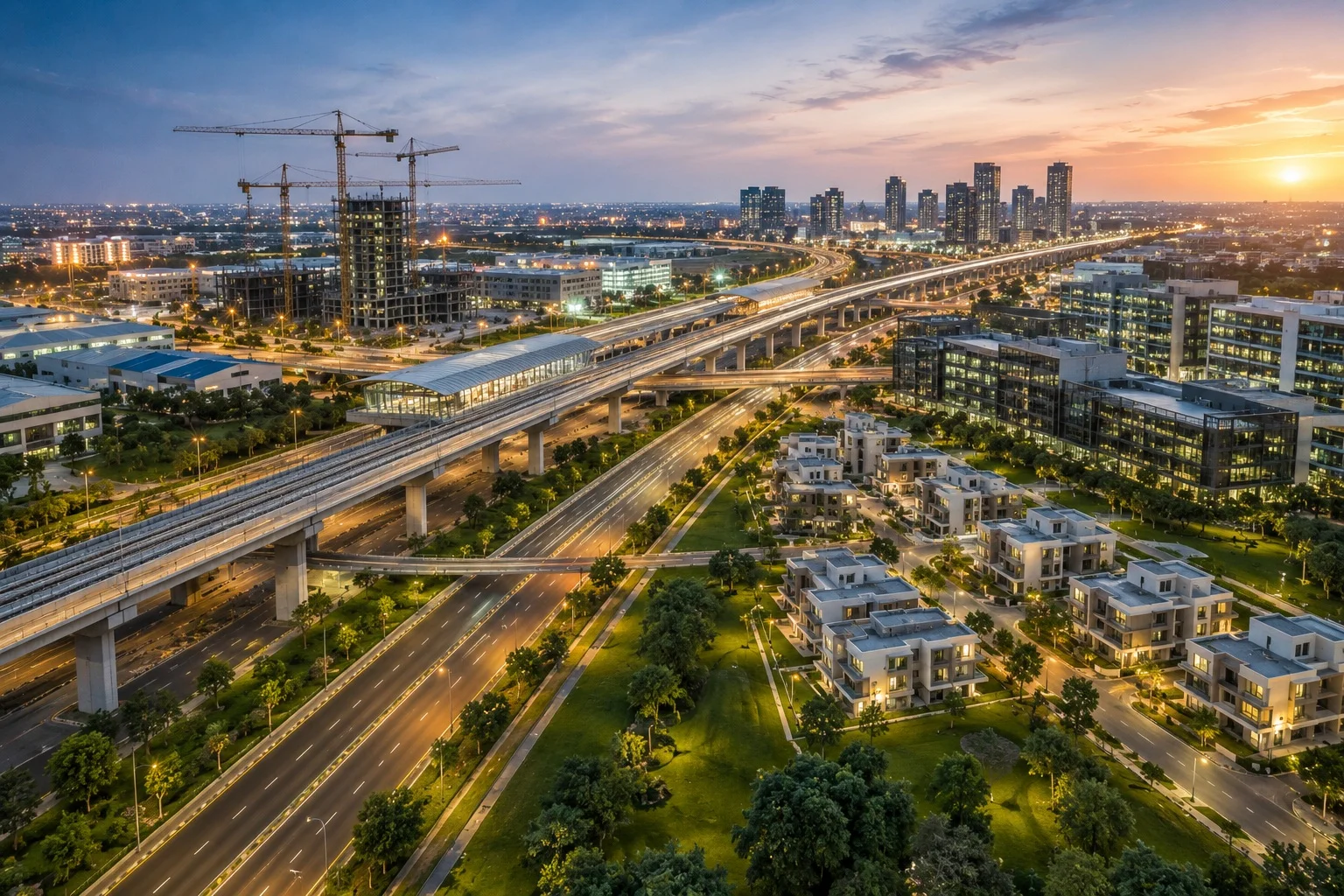
Economic reforms frequently go hand in hand with infrastructure investment. Improved roads, transportation networks, utilities, and industrial zones make surrounding areas more accessible and attractive for businesses and residents.
Better infrastructure generally leads to:
- Higher property demand
- Improved accessibility
- Rising land values
- Increased commercial activity
- Long-term investment opportunities
As connectivity improves, previously overlooked locations may become attractive for residential and commercial development. Investors who identify these areas early often benefit from future price appreciation.
Industrial Expansion May Create New Investment Opportunities
Privatization can also contribute to industrial growth by encouraging greater private sector participation in manufacturing and logistics. Expansion of industrial activities increases demand for nearby warehouses, worker housing, commercial plazas, and transportation facilities.
Industrial corridors often experience steady real estate growth because businesses require supporting infrastructure. Investors interested in long-term returns may find opportunities in areas located near industrial estates and major transportation routes.
As industrial development expands, surrounding residential communities frequently experience higher occupancy rates and increased property demand.
Residential Property Demand Could Rise
While commercial properties usually respond first to economic reforms, residential real estate also benefits over time.
Business expansion creates employment opportunities, attracting workers and professionals to growing urban centers. As population movement increases, demand for apartments, houses, and residential plots often rises.
Developers may respond by launching new housing projects with improved facilities, modern infrastructure, and better community planning. This can create additional choices for homebuyers while supporting long-term growth in the housing market.
However, the pace of residential growth will largely depend on overall economic performance, affordability, financing availability, and consumer confidence.
Challenges That Investors Should Consider
Although the revised privatization roadmap presents several opportunities, investors should maintain realistic expectations. Privatization is a gradual process, and its impact on the real estate market may take time to become visible.
Some factors that could influence market performance include:
- Speed of privatization implementation
- Political and economic stability
- Inflation and interest rates
- Availability of investment financing
- Government policies affecting the property sector
- Overall investor confidence
Real estate markets typically respond to broader economic conditions rather than a single government policy. Investors should therefore combine market research with long-term planning before making investment decisions.
What Property Investors Should Do
Rather than making investment decisions based solely on privatization news, investors should monitor broader market indicators.
Important considerations include:
- Track government infrastructure projects.
- Research areas experiencing commercial expansion.
- Verify the legal status of housing societies.
- Evaluate long-term development plans before purchasing property.
- Diversify investments to reduce risk.
- Follow changes in property taxation and investment regulations.
Investors who focus on locations with strong economic fundamentals are generally better positioned to benefit from future market growth.
Future Outlook for Pakistan’s Real Estate Market
The revised Pakistan privatization roadmap has the potential to strengthen the country’s investment environment if implemented effectively. Increased private sector participation, improved business confidence, and continued infrastructure development could create favorable conditions for real estate growth over the long term.
Commercial properties may experience stronger demand as businesses expand, while residential markets could benefit from employment growth and urban development. Industrial real estate may also gain momentum as manufacturing and logistics activities increase.
However, sustainable growth will depend on consistent government policies, successful implementation of economic reforms, and continued efforts to improve transparency and investor confidence.
Conclusion
Pakistan’s revised privatization roadmap represents an important step toward broader economic reform and private sector participation. Although the policy primarily targets state-owned enterprises, its effects could extend well beyond those organizations, influencing investment activity, infrastructure development, and the Pakistan real estate market.
For property buyers and investors, the roadmap should be viewed as one of several indicators shaping future market trends rather than an immediate guarantee of rising property prices. Careful research, legal due diligence, and a long-term investment strategy remain essential for making informed real estate decisions.
As Pakistan continues to implement economic reforms, investors who stay informed about privatization developments, infrastructure projects, and market conditions will be better prepared to identify emerging opportunities in the evolving real estate landscape.
Want to know more? Check out Pakistan Real Estate Market Outlook After Budget 2026–27: Trends, Predictions & Investment Opportunities.
Like, share and comment: Facebook, Instagram, Youtube and TikTok.




Join The Discussion