
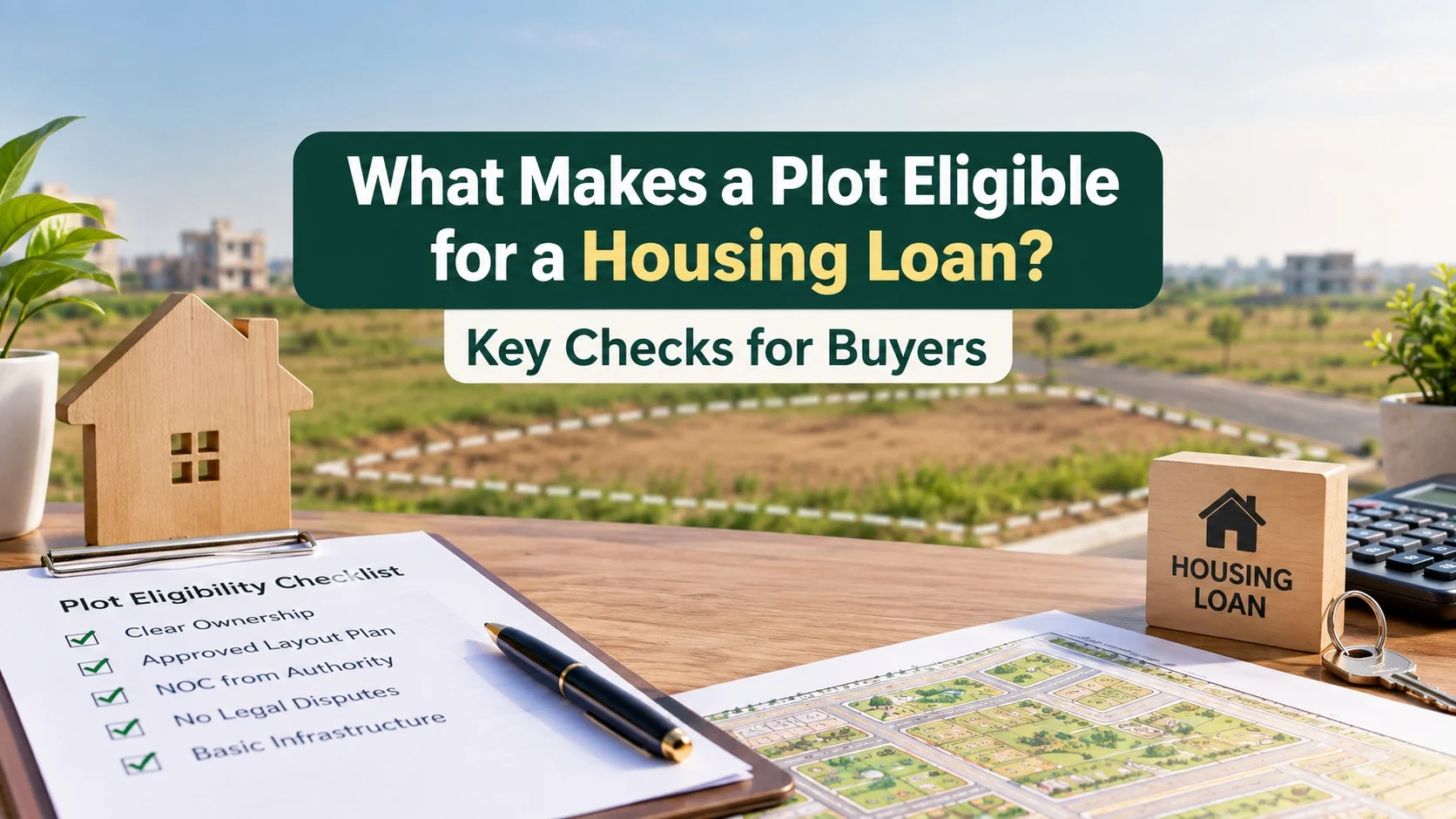
Buying a plot with the help of a housing loan can make property ownership more affordable, but not every plot automatically qualifies for financing. Understanding plot eligibility for housing loan is important because banks and housing finance providers usually assess the property’s legal status, ownership records, location, value, and approval status before approving a loan.
Understanding plot eligibility for a housing loan can help buyers avoid delays, unexpected costs, and properties that may create problems during the financing process.
What Makes a Plot Eligible for a Housing Loan?
A plot generally needs to meet several legal, financial, and property-related conditions before a lender can consider it suitable for housing finance. The exact requirements vary between lenders and loan products, but buyers should pay particular attention to the following checks.
1. Clear and Verifiable Ownership
The first major requirement is clear ownership of the plot. The seller should have valid documents proving that they legally own the property and have the right to sell it.
Depending on the property, relevant documents may include a sale deed, registry, allotment letter, possession documents, or other ownership records.
Buyers should also check whether the ownership information matches official land records. If ownership is unclear, disputed, or involves multiple unresolved claims, a lender may consider the property unsuitable as collateral.
A clear title therefore plays an important role in plot loan eligibility.
2. Approved Housing Scheme or Development Authority Status
The plot’s location and approval status can significantly affect its eligibility.
If the plot is located in a housing scheme, buyers should verify whether the scheme has been approved by the relevant development authority. They should also check the status of its NOC and other required permissions.
Buying a plot in an unapproved or legally problematic housing scheme can create difficulties not only for obtaining financing but also for future resale and construction.
Before applying for a housing loan, confirm:
- Housing scheme approval
- NOC status
- Development authority jurisdiction
- Approved land-use status
- Relevant layout or development permissions
These checks can help determine whether the property is acceptable to the lender.
3. Proper Property Documentation
Banks normally require property documents to evaluate the legal status and ownership of the land. Missing or inconsistent documents can delay the application.
Depending on the property and lender, documentation may include:
- Ownership or title documents
- Sale deed or registry
- Allotment letter
- Possession letter
- Mutation or relevant land-record documents
- Approved site or layout plan
- NOC or approval documents
- Evidence of payment of applicable property dues
The exact documentation varies, so buyers should obtain the lender’s document checklist before making financial commitments.
4. Residential Use and Construction Potential
The intended use of the plot is another important consideration.
A plot intended for residential construction may be treated differently from agricultural or commercial land. Buyers should verify that the plot’s permitted land use matches their intended purpose.
If the buyer plans to construct a house using financing, it is also important to understand whether construction is permitted on the plot and whether building-plan approval will be required.
A plot that cannot legally be developed for the intended purpose may not meet the lender’s property requirements.
5. No Major Legal Disputes or Encumbrances
A lender needs confidence that the property can serve as security for the loan. This is why legal verification is an important part of the process.
Buyers should check whether the plot has:
- Ownership disputes
- Court cases
- Existing mortgages
- Claims from third parties
- Transfer restrictions
- Unresolved inheritance issues
- Other encumbrances
A property with a complicated legal history can create problems for both the buyer and lender.
A clear title does not simply mean having a document in hand. Buyers should make sure the ownership chain and relevant records are properly verified.
6. Property Valuation
Even when a plot is legally acceptable, its value matters.
The lender may arrange a property valuation to determine the market value of the plot and assess whether it provides adequate security for the proposed financing.
The buyer should not assume that the lender will value the property at the same amount agreed with the seller. If the lender’s assessed value is lower than the purchase price, the buyer may need to arrange additional funds.
Understanding property valuation for housing loans can therefore help buyers plan their finances more realistically.
7. Location and Accessibility
Location can also influence how a lender assesses a property.
Plots in established or properly planned areas with access to roads, utilities, and other basic infrastructure may be easier to evaluate than properties in locations with unclear development status.
Buyers should examine:
- Road access
- Electricity availability
- Water and sanitation arrangements
- Development status
- Surrounding infrastructure
- Accessibility of the property
These factors can affect both the practical value of the plot and its future marketability.
8. Outstanding Dues Should Be Checked
Before purchasing a plot, buyers should determine whether any development charges, property taxes, utility-related payments, or other dues are outstanding.
Unpaid amounts can sometimes complicate the transfer process or create additional financial obligations for the buyer.
Requesting evidence of cleared dues and checking the relevant records can reduce the risk of unexpected liabilities.
9. The Buyer Must Also Meet Loan Requirements
Plot eligibility is only one side of the approval process. The borrower must also meet the lender’s financial requirements.
A lender may assess factors such as:
- Income
- Employment or business stability
- Credit history
- Existing debts
- Repayment capacity
- Age and other applicable criteria
Therefore, a legally eligible plot does not guarantee loan approval.
The lender is effectively evaluating two separate questions: Is the property acceptable, and is the borrower financially eligible?
How Buyers Can Check Plot Eligibility Before Applying
A practical approach is to verify the property before paying a large non-refundable amount.
Step 1: Collect the ownership documents
Ask the seller for the relevant title, registry, allotment, possession, and land-record documents.
Step 2: Verify the property independently
Compare the documents with official records and confirm the seller’s ownership.
Step 3: Check scheme approval
If the plot is located in a housing scheme, verify its approval and NOC status with the relevant authority.
Step 4: Confirm permitted land use
Make sure the plot can legally be used and developed for your intended purpose.
Step 5: Check for disputes and dues
Investigate potential legal claims, mortgages, restrictions, and outstanding payments.
Step 6: Ask the lender for its property requirements
Before finalizing the transaction, provide the property details to the lender and ask whether it meets the lender’s requirements.
Why Plot Eligibility Matters Before Buying

Checking housing loan eligibility for plot owners before purchasing can save buyers from a common problem: committing to a property first and discovering later that financing is unavailable.
A plot may appear attractive because of its price or location, but legal issues, unclear ownership, approval problems, or valuation differences can affect its financing potential.
The safest approach is to treat financing eligibility as part of the property due-diligence process rather than something to check after the purchase decision has already been made.
Frequently Asked Questions
1. What makes a plot eligible for a housing loan?
A plot is generally more likely to qualify when it has clear ownership, valid property documents, required approvals, permitted land use, no major legal disputes, and a value acceptable to the lender. The borrower must also meet the lender’s financial eligibility requirements.
2. Can I get a housing loan to build a house on my own plot?
Yes, some lenders offer financing for house construction on an owned plot, subject to their eligibility criteria. The lender may verify ownership, construction permissions, approved plans, property value, income, and repayment capacity before approving the financing.
3. What documents are required for a housing loan on a plot?
Requirements vary by lender, but applicants may need ownership or title documents, registry or sale deed, allotment and possession documents where applicable, land-record documents, approval or NOC documents, and evidence of cleared property dues. The lender may request additional documents during verification.
4. Does housing scheme approval affect plot loan eligibility?
Yes. A lender may consider the approval and legal status of the housing scheme when evaluating a plot. Buyers should verify the scheme’s approval, NOC status, development authority requirements, and permitted land use before relying on financing.
5. Can a disputed plot qualify for a housing loan?
A plot with unresolved ownership disputes, legal claims, an existing mortgage, or other significant encumbrances may not meet a lender’s property requirements. Buyers should complete legal and ownership verification before purchasing the plot or applying for financing.
Conclusion
A plot suitable for housing finance generally needs more than a reasonable price. Buyers should look for clear ownership, proper documentation, approved status, suitable land use, no major legal disputes, acceptable valuation, and a location that meets the lender’s requirements.
At the same time, borrowers must satisfy the lender’s own income, credit, and repayment criteria.
Before signing a final agreement, verify both the property and the financing conditions. Requirements can differ between banks and housing finance providers, so obtaining confirmation from the chosen lender and conducting independent legal and property verification can help buyers make a safer decision.
Want to know more? Check out Apna Ghar Scheme Survey: How Plot Owners Can Get Housing Loans.
Like, share and comment: Facebook, Instagram, Youtube and TikTok.



Join The Discussion