
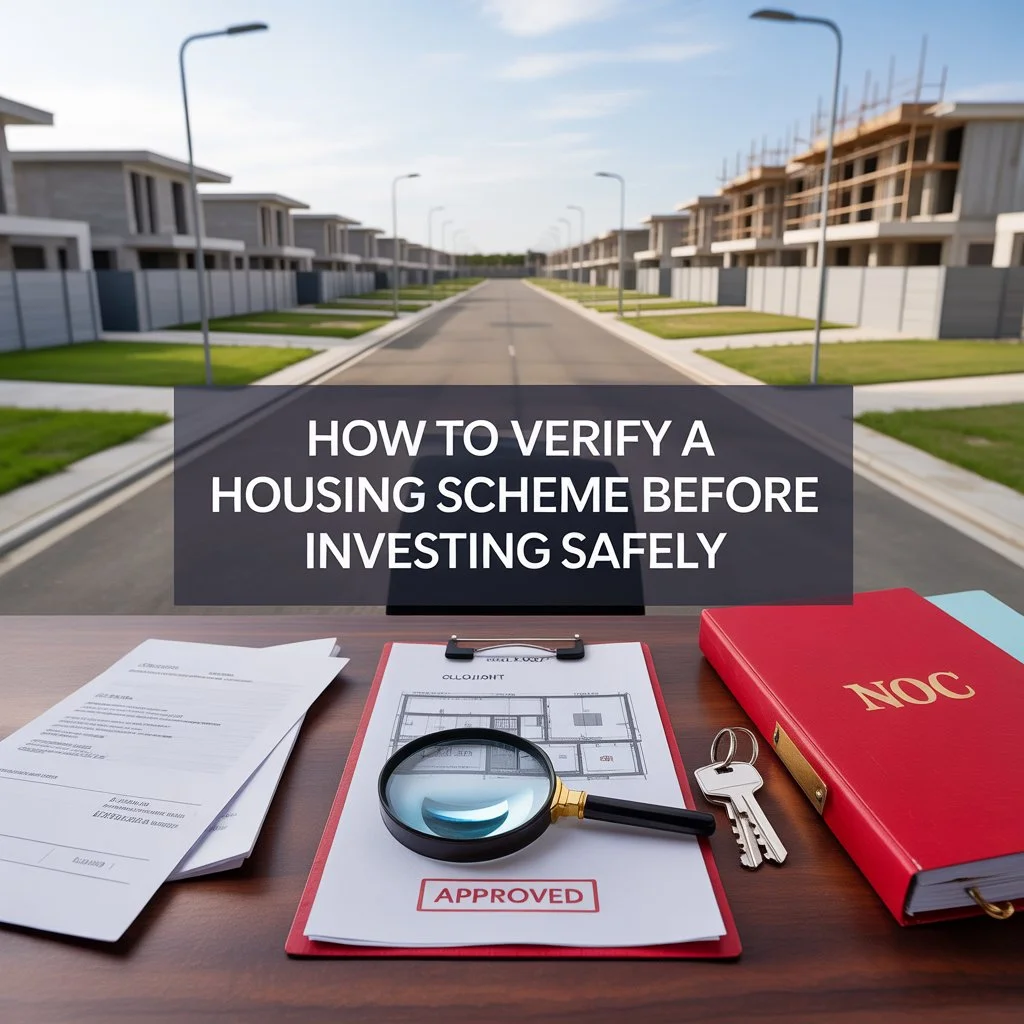
Investing in real estate has always been considered one of the safest and most profitable investment options in Pakistan. With the rapid expansion of cities and the launch of numerous new housing schemes, buyers and investors now have more choices than ever. However, this growth has also increased the risk of fraud, illegal housing societies, and unapproved projects. Many investors have lost their hard-earned money due to lack of proper verification. That is why understanding how to verify a housing scheme before investing safely is essential for protecting your investment and ensuring long-term returns.
Why Verification of a Housing Scheme Is Important
Before investing in any housing project, verification is crucial to avoid legal issues, delays in possession, or complete loss of capital. Unapproved housing schemes often promise high returns and low prices, but they come with serious risks such as demolition, heavy fines, or cancellation by authorities. Proper verification ensures that the project is legally approved, the developer is credible, and the land ownership is clear.
Check Approval from Relevant Development Authorities
The first and most important step in verifying a housing scheme is to check whether it is approved by the relevant development authority. Each city in Pakistan has its own regulatory body responsible for approving housing projects.
For example:
- Faisalabad Development Authority (FDA) for Faisalabad
- Lahore Development Authority (LDA) for Lahore
- Rawalpindi Development Authority (RDA) for Rawalpindi
- Capital Development Authority (CDA) for Islamabad
Always confirm that the housing scheme has a valid No Objection Certificate (NOC). An approved NOC means the project complies with zoning laws, planning regulations, and infrastructure standards. Be cautious of schemes that claim they have “applied for NOC” but are not yet approved, as this does not provide legal protection.
Verify Registration with PERA
In Punjab, housing schemes and real estate developers must be registered with the Punjab Real Estate Regulatory Authority (PERA). PERA was established to regulate the real estate sector, protect buyers’ rights, and ensure transparency.
Before investing, check whether:
- The housing scheme is registered with PERA
- The developer or real estate agent is PERA-certified
PERA registration adds an extra layer of security and accountability. Investing in a PERA-registered project reduces the risk of fraud and illegal dealings.
Research the Developer’s Background and Reputation

A developer’s track record plays a major role in the success of a housing scheme. Before making any financial commitment, research the developer thoroughly.
Key points to check include:
- Previous projects completed and delivered on time
- Quality of construction and development standards
- Market reputation and customer reviews
- Any history of legal disputes or complaints
Well-known and reputable developers are more likely to complete projects according to their promises, while inexperienced or unknown developers may pose higher risks.
Confirm Land Ownership and Title Documents
Clear land ownership is a critical factor in verifying a housing scheme. Many fraudulent projects sell plots on disputed or agricultural land without proper conversion approval.
To ensure safety:
- Ask for land ownership documents
- Verify mutation (Inteqal) records
- Check land records through local revenue offices or patwari
- Ensure the land is approved for residential use
If the land title is unclear or disputed, avoid investing regardless of how attractive the offer may seem.
Review the Approved Master Plan and Layout
Every legally approved housing scheme has an approved master plan and layout. This plan shows roads, parks, commercial areas, schools, mosques, and other facilities.
Compare:
- The approved layout plan from authorities
- The marketing brochures and advertisements
If there is a mismatch between what is being advertised and what is officially approved, it is a red flag. Always rely on officially approved documents rather than promotional material.
Analyze Payment Plans and Pricing Carefully
Unrealistically low prices and flexible installment plans are often used to attract buyers. While affordable payment plans can be genuine, they should be evaluated carefully.
Check for:
- Development charges
- Possession fees
- Transfer and registration costs
- Hidden charges not mentioned initially
If a deal seems too good to be true, it usually is. Legitimate housing schemes maintain market-competitive pricing with transparent payment structures.
Visit the Site Personally
Never invest in a housing scheme without visiting the site yourself. A physical visit gives you a clear idea of the actual development status.
During the site visit, observe:
- Road infrastructure and access
- Boundary walls and plot demarcation
- Availability of utilities such as electricity, water, and sewerage
- On-ground development compared to claims
A site visit helps you distinguish between paper projects and genuine developments.
Check Possession and Transfer Policy
Understanding the possession and transfer process is essential before investing. Some schemes only offer file-based investments, which carry higher risks.
Make sure to confirm:
- Whether plot registry or mutation is allowed
- Timeline for possession
- Transfer procedure and charges
Prefer projects that offer legal registry and timely possession rather than long-term file-based investments.
Consult Legal and Property Experts
If you are unsure about documents or approvals, consult a property lawyer or a trusted real estate professional. Legal experts can verify documents and identify potential risks that may not be obvious to buyers.
Professional advice may cost a small fee, but it can save you from major financial losses in the future.
Common Red Flags to Avoid
Be cautious if you notice:
- No valid NOC or expired approval
- Pressure to book immediately
- Cash-only payment demands
- Fake approval certificates
- No physical office or official presence
These warning signs often indicate illegal or risky housing schemes.
Conclusion
Verifying a housing scheme before investing is not just a recommendation it is a necessity in Pakistan’s real estate market. By checking approvals, PERA registration, developer credibility, land ownership, and on-ground development, investors can significantly reduce risks and protect their capital. A safe and verified investment not only ensures peace of mind but also delivers better long-term returns. Smart verification today can save you from costly mistakes tomorrow.
Want to know more? Check out CM Outlines Objectives of Punjab Property Law for Investors
Like, share and comment: Facebook, Instagram, Youtube and TikTok.




Join The Discussion