
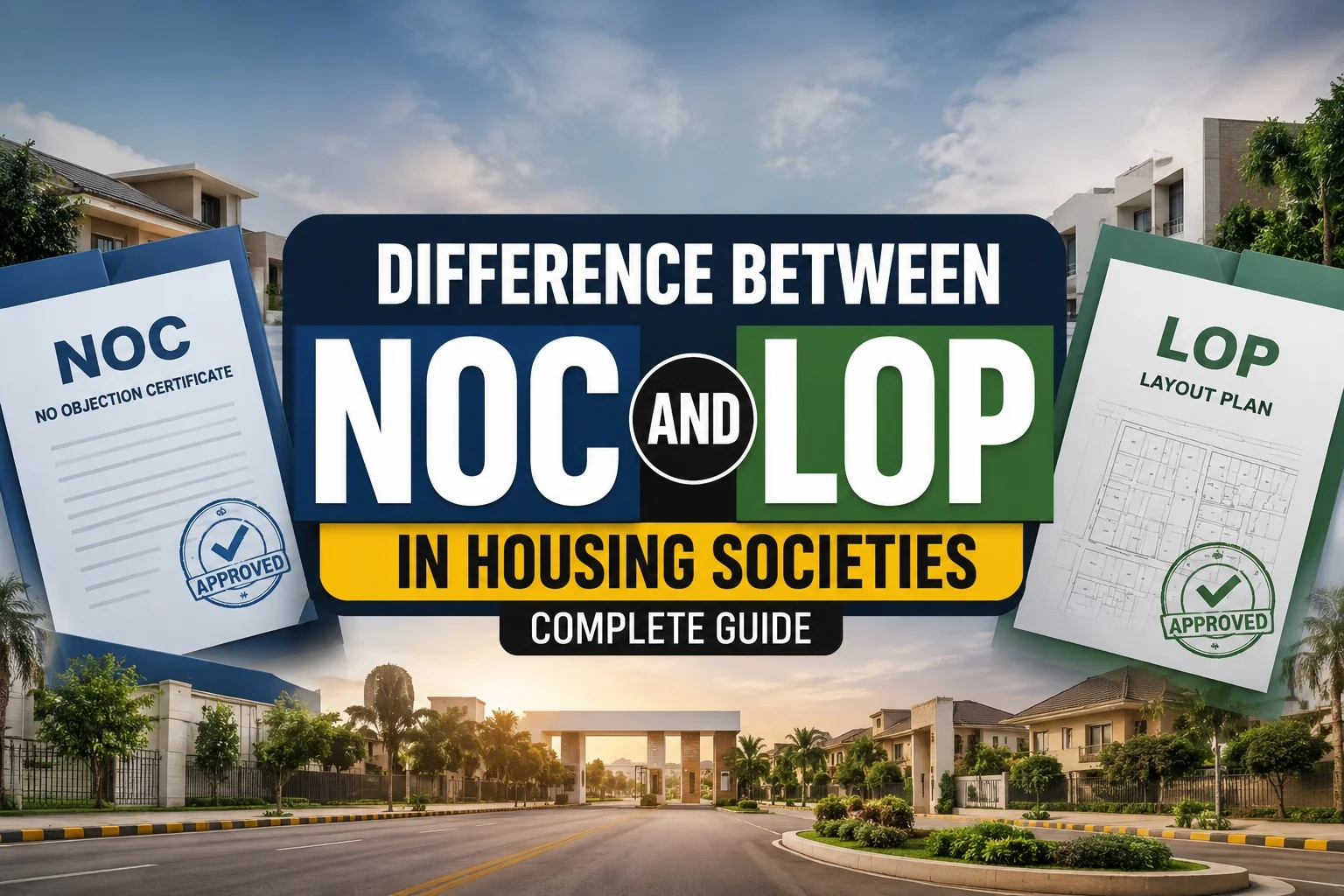
Buying property is one of the biggest financial decisions you will ever make. Whether you are purchasing a residential plot, commercial property, or investing in a new housing society, understanding the legal approvals behind a project is essential. Two terms that often confuse buyers are NOC (No Objection Certificate) and LOP (Layout Plan). Many people assume they mean the same thing, but they serve different purposes in the approval process of a housing society.
Knowing the difference between NOC and LOP in housing societies can help you avoid unauthorized projects, reduce the risk of property fraud, and make informed investment decisions. This guide explains what each approval means, why both are important, and what every property buyer should verify before making a purchase.
What Is an NOC in a Housing Society?
An NOC (No Objection Certificate) is an official approval issued by the relevant development authority after reviewing a housing project’s compliance with applicable rules and regulations. It indicates that the authority has no objection to the project proceeding, subject to the terms and conditions of the approval.
The purpose of an NOC is to ensure that a housing society has fulfilled the required legal and administrative requirements before development moves forward.
An NOC generally helps confirm that:
- The project has obtained the necessary regulatory approval.
- The developer has complied with applicable planning requirements.
- The housing society is recognized by the concerned authority.
- Buyers have greater confidence in the project’s legal status.
Although an NOC is an important milestone, buyers should remember that it is only one part of the overall approval process.
What Is an LOP (Layout Plan)?
An LOP (Layout Plan) is the officially approved plan that shows how a housing society will be developed. It illustrates the proposed arrangement of residential and commercial plots, roads, parks, public facilities, utility corridors, and other infrastructure.
The Layout Plan acts as the blueprint for the development of the project and helps ensure that the society follows urban planning standards.
An approved Layout Plan typically includes:
- Residential and commercial plot layouts
- Road network and street widths
- Parks and green spaces
- Mosques, schools, and community facilities
- Utility infrastructure and drainage systems
- Public amenities and open areas
Without an approved Layout Plan, buyers may face uncertainty about future infrastructure, plot dimensions, or land use.
Difference Between NOC and LOP in Housing Societies
Although both approvals are issued by the relevant authority, they have different objectives.
| Feature | NOC | LOP |
| Full Form | No Objection Certificate | Layout Plan |
| Purpose | Confirms regulatory approval for the project | Approves the physical planning and layout of the society |
| Focus | Legal and administrative compliance | Land use, infrastructure, and development planning |
| Importance | Confirms the project’s approval status | Shows how the society will be developed |
| Covers | Regulatory requirements | Roads, plots, parks, public facilities, and infrastructure |
In simple terms, an NOC focuses on regulatory approval, while an LOP focuses on planning and development. Both approvals are important for a legally compliant housing society.
Why Property Buyers Should Verify Both
Many buyers pay attention only to location, price, or expected returns while overlooking legal approvals. Verifying both the NOC and the approved Layout Plan can help reduce risks associated with unauthorized developments.
Before purchasing a property, make sure you:
- Confirm that the housing society has the required approvals from the relevant authority.
- Review the approved Layout Plan to understand the project’s design.
- Ensure your selected plot appears in the approved plan.
- Check whether any revisions or changes have been made to the original layout.
- Verify information through official sources instead of relying solely on marketing materials.
Taking these steps can help you make a safer investment decision.
Can a Housing Society Have an LOP but No NOC?
Approval procedures may vary depending on the development authority and local regulations. In some cases, approvals are granted in stages, meaning certain planning-related approvals may be issued while other regulatory requirements are still under review.
Because the approval process differs between authorities, buyers should always verify the current approval status directly with the concerned development authority before purchasing property.
Common Misconceptions About NOC and LOP
Many first-time buyers misunderstand the purpose of these approvals. Here are some common misconceptions.
Myth 1: NOC and LOP are the same document.
They are different approvals. An NOC relates to regulatory approval, while an LOP relates to the physical planning of the project.
Myth 2: An approved Layout Plan guarantees every legal approval.
An approved layout does not automatically confirm that every required approval has been obtained.
Myth 3: A housing society with attractive marketing must be fully approved.
Promotional materials should never replace independent verification through official authorities.
Documents to Check Before Buying a Plot
Apart from the NOC and Layout Plan, buyers should review other important documents before making a purchase.
These may include:
- Property ownership records
- Sale agreement
- Allotment documents
- Development status
- Payment schedule
- Utility availability
- Plot location within the approved layout
- Any applicable approvals or permissions required by the relevant authority
Proper due diligence can protect buyers from unnecessary legal and financial complications.
Benefits of Buying Property in an Approved Housing Society

Investing in a properly approved housing society offers several advantages.
Some of the key benefits include:
- Greater confidence in the project’s legal standing
- Better long-term investment potential
- Improved infrastructure planning
- Higher buyer and investor confidence
- Reduced risk of disputes related to unauthorized development
- Better access to public utilities and community facilities
While no investment is completely risk-free, verifying approvals significantly improves your chances of making a secure property purchase.
Tips for Verifying Housing Society Approvals
Before making any payment, follow these practical steps:
- Visit the official website of the relevant development authority.
- Check the latest approval status of the housing society.
- Review the approved Layout Plan
- Compare the plot location with the approved map.
- Ask the developer for supporting documentation.
- Consult a qualified legal or property professional if you have any doubts.
- Avoid investing based solely on advertisements or social media promotions.
These simple precautions can help you avoid costly mistakes.
Frequently Asked Questions (FAQs)
1. What is the difference between an NOC and an LOP in a housing society?
An NOC (No Objection Certificate) confirms that a housing society has received the required regulatory approval from the relevant development authority. An LOP (Layout Plan) is the approved plan that shows how the society will be developed, including residential and commercial plots, roads, parks, and public facilities. While an NOC focuses on legal approval, an LOP focuses on planning and development.
2. Is an NOC mandatory before buying property in a housing society?
An NOC is an important approval because it indicates that the housing society has met the required regulatory conditions. Before purchasing property, buyers should verify the project’s approval status with the relevant development authority and ensure all necessary approvals are in place.
3. What does an approved Layout Plan (LOP) include?
An approved Layout Plan typically includes the location and size of residential and commercial plots, road networks, parks, green spaces, schools, mosques, utility infrastructure, drainage systems, and other community facilities planned for the housing society.
4. Can a housing society have an LOP but no NOC?
Approval procedures may vary depending on the relevant development authority. In some cases, approvals are issued in stages, so a project may receive certain planning-related approvals while other regulatory approvals are still pending. Buyers should always verify the current approval status before investing.
5. How can I verify a housing society’s NOC and LOP?
You can verify a housing society’s approval status by checking the official website or contacting the relevant development authority. Compare the approved Layout Plan with the plot details provided by the developer and confirm that the project has the required approvals before making any payment.
6. Why are both NOC and LOP important for property buyers?
Both approvals help buyers make informed decisions. An NOC provides confidence that the project has obtained the necessary regulatory approval, while an approved LOP allows buyers to understand the planned layout, infrastructure, and amenities of the housing society.
7. Does an NOC guarantee that a housing society is completely risk-free?
No. Although an NOC is an important approval, buyers should also review the approved Layout Plan, verify ownership records, examine development progress, and perform proper due diligence before investing in any property.
8. What documents should I check before purchasing a plot?
Before buying a plot, you should verify the housing society’s approval status, approved Layout Plan, ownership records, allotment documents, sale agreement, payment schedule, and any other relevant legal documents. Consulting a qualified legal or property professional can also help ensure a secure investment.
Conclusion
Understanding the difference between NOC and LOP in housing societies is essential for every property buyer. While an NOC confirms that a project has received the necessary regulatory approval, an LOP defines how the housing society will be planned and developed. Both approvals play different but equally important roles in protecting buyers and supporting organized urban development.
Before investing in any housing project, take time to verify the approval status, review the Layout Plan, and confirm that the information matches official records. Careful research today can save you from legal issues, financial losses, and property disputes in the future. Making informed decisions is one of the most effective ways to protect your investment and ensure peace of mind.
Want to know more? Check out How to Verify a Housing Society Before Investing: A Complete Guide to Avoid Property Scams.
Like, share and comment: Facebook, Instagram, Youtube and TikTok.



Join The Discussion