

A property dealer can help you find a plot or house in Faisalabad, or a dealer can cost you your money. The difference is whether you verify the property dealer before you pay.
To verify property dealer credentials, check who the dealer is, where the dealer works, what the dealer has sold before, and what the dealer wants in writing. Then check the property itself, separately. A good dealer will welcome both checks. A dealer who rushes you past them is giving you your answer.
Why Dealer Verification Matters
Most buyers meet the dealer first and the property second. The dealer shows the plot, names the price, and asks for a token. By that point, many buyers already trust the dealer.
That trust should be earned, not assumed. A dealer is not the owner, not the FDA, and not the land record office. A dealer can show you a plot the dealer does not own, quote a price the owner has not agreed, or promise approval the scheme does not have.
Verifying the dealer does not replace verifying the property. It comes first, and it protects the money you are about to pay.
Step 1: Check Identity and Office
Start with the basics. Ask for the dealer’s full name and CNIC, and the name and address of the office. Visit the office. Is it a real office, with a signboard, a phone number that works, and staff who know the dealer by name?
A dealer who works only from a car or a phone number that keeps changing is not automatically dishonest, but you have nothing to fall back on if the deal goes wrong. An office gives you a place to return to.
Ask how long the dealer has worked in that area. A dealer who knows one area well can usually name past sales, nearby blocks, and current prices without guessing.
Step 2: Check Past Deals and References
Ask for two or three past deals you can check. Not names on a list, but buyers you can speak to, or sales you can confirm from the record.
Ask what the dealer sold last, in which block, and whether the transfer completed. A genuine dealer will answer without anger. A dealer who refuses to give any reference, or who says every past buyer is private, is asking you to trust without proof.
Also ask around the area. One bad word is not proof, but a pattern of the same complaint is a warning.
Step 3: Get the Deal in Writing
Before you pay a token, get the deal in writing. The dealer should be able to tell you, in writing: the exact plot or house number, the block, the size, the owner name as per the record, the price, the commission, and what happens to your token if the deal fails.
If the dealer will not put the commission in writing, pause. Commission is normal, but it must be agreed before payment, not discovered after. Agree who pays it, how much it is, and when it is due.
Do not accept a deal where the dealer is both the seller’s agent and your agent, with no written terms. That is a conflict, and it should be named in writing.
Step 4: Check the Property Yourself
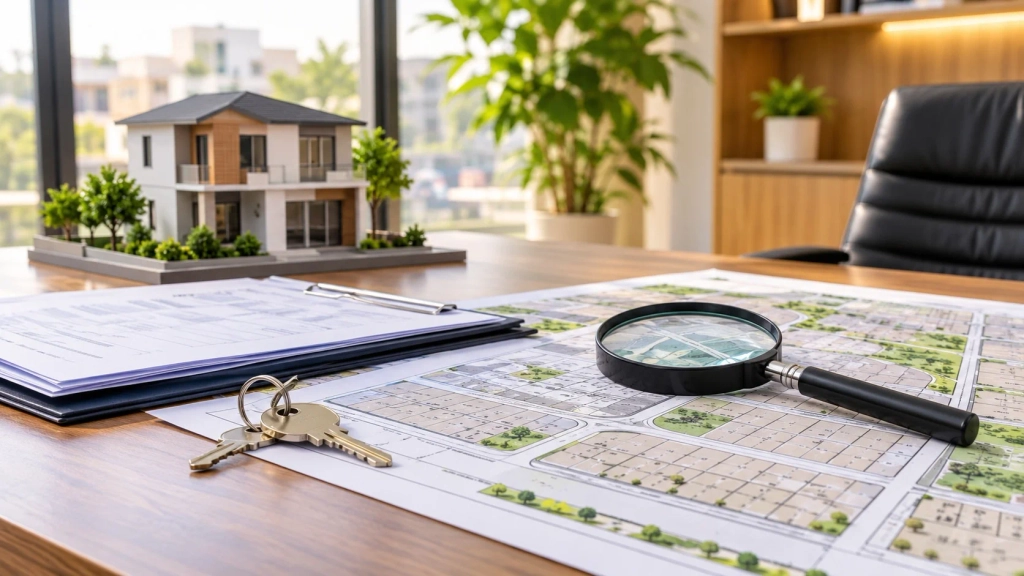
A verified dealer is still not proof that the property is clean. This is the step most buyers skip.
Check the scheme approval, the approved layout plan, the ownership record, and the FDA defaulter list yourself, or through a trusted advisor. Ask for the Ownership Clearance Certificate (OCC) from Estate Management-I, or Estate Management-II for FDA City, before you pay in full. Match the plot number, owner name, and area on every document.
For the full property check, see how to check a housing scheme’s legal status in Faisalabad. If the dealer says verification is unnecessary, treat that as a red flag, not a reassurance.
Step 5: Pay in a Traceable Way
How you pay matters as much as how much you pay. Pay by bank transfer where possible, not in cash without a signed receipt. If cash is unavoidable, pay only against a signed, dated receipt that states the amount, the purpose, the plot details, and the names of both parties.
Do not pay a token to a personal account without a written agreement that names the dealer, the seller, and the property. Do not pay the full price to the dealer to pass on to the seller. Pay the seller directly, under a written agreement, and keep every receipt.
If the dealer asks you to pay in full today because another buyer is waiting, pause. A genuine deal can wait for a written agreement and a bank transfer.
Red Flags: Walk Away If You See These
Walk away, or get independent advice first, if the dealer will not show an office, will not give a CNIC, will not name past deals, or will not put the commission in writing.
The same applies if the dealer pressures you to pay cash today, refuses to let you check the property record yourself, or offers a price far below the market with no written reason.
Also be careful if the dealer acts under a power of attorney. A PoA lets one person act for the owner, but a forged, revoked, or expired PoA cannot pass a valid title. Check the PoA separately, before you pay.
Dealer Checklist: Before You Pay
- Dealer’s full name, CNIC, and office address checked?
- Office visited, phone number working?
- Two or three past deals or references checked?
- Plot number, block, size, and owner name in writing?
- Commission agreed in writing, before payment?
- Scheme approval, layout plan, OCC, and defaulter list checked yourself?
- Token terms in writing, with what happens if the deal fails?
- Payment by bank transfer, with a signed receipt?
If any answer is no, pause. A pause before payment is cheaper than a dispute after payment.
Frequently Asked Questions (FAQs)
Check the identity and office, ask for past deals and references, get the plot details and commission in writing, check the property record yourself, and pay by bank transfer with a receipt.
Ask for the CNIC and office details, the plot and owner details in writing, the commission agreement, and the property papers scheme approval, layout plan, OCC, and defaulter list position.
Pay by bank transfer where possible, against a written agreement and a signed receipt. Do not pay cash without a receipt, and do not pay the full price to the dealer to pass on to the seller.
No office, no CNIC, no past deals, no written commission, pressure to pay cash today, and refusal to let you check the property record yourself.
No. A verified dealer is a good start, but you must still check the property itself approval, layout, ownership, and dues before you pay in full.
Conclusion
A property dealer can save you time, but only a verified dealer is worth paying. Check the dealer, check the property, get everything in writing, and pay in a traceable way.
For help checking a dealer and the property papers before you pay, contact a trusted Faisalabad property advisor before you sign.
Want to know more? Check out Property Investment in Pakistan: Tax, Documents & Approval Checks.
Like, share and comment: Facebook, Instagram, Youtube and TikTok.




Join The Discussion