
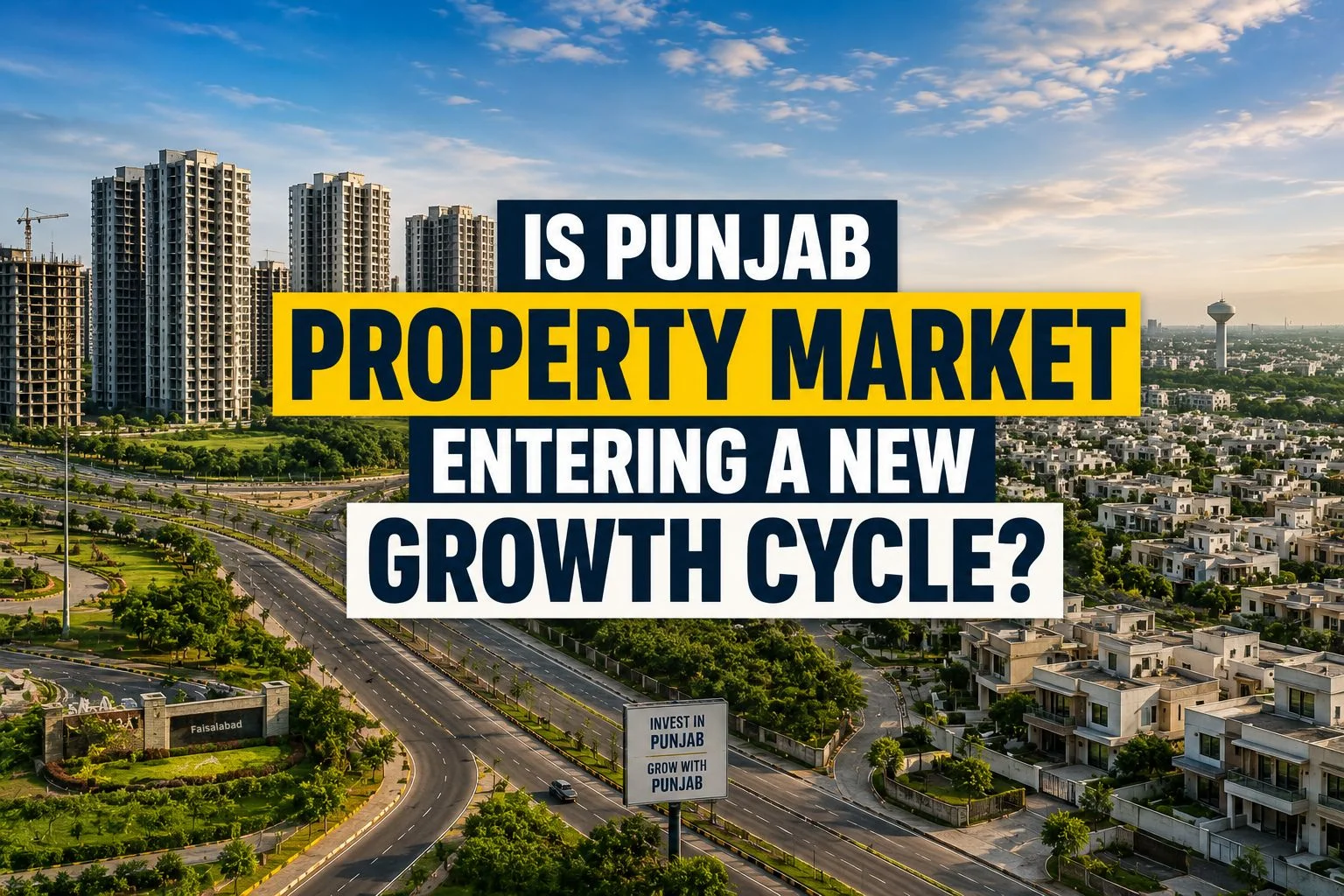
The Punjab property market has always played a central role in Pakistan’s real estate sector, driven by population growth, urban expansion, and continuous infrastructure development. In recent months, there has been increasing discussion among investors, analysts, and property dealers about whether the Punjab property market is entering a new growth cycle. While the market went through periods of slowdown due to economic uncertainty, current indicators suggest a shift toward renewed activity and investor confidence.
This article explores the latest trends, key drivers, and future outlook of the Punjab real estate market to understand whether a new growth phase is truly emerging.
Rising Investor Confidence in Punjab Real Estate Market
One of the strongest signals of recovery in the Punjab property market is improving investor sentiment. After a period of hesitation caused by inflation, high construction costs, and taxation changes, buyers are gradually returning to the market.
Investors are once again showing interest in both residential and commercial properties, especially in cities like Lahore, Faisalabad, Multan, Gujranwala, and Sialkot. These urban centers are experiencing steady demand due to job opportunities, industrial growth, and expanding housing societies.
The renewed confidence is also linked to expectations of long-term appreciation in property values, particularly in well-developed and newly emerging housing schemes.
Urban Expansion Driving Property Market Growth
Urbanization continues to be one of the most powerful forces shaping the Punjab property market. Cities are expanding rapidly as rural populations move toward urban areas in search of better education, employment, and healthcare facilities.
Faisalabad, in particular, is witnessing continuous horizontal expansion. New housing societies are being developed on the outskirts of the city, creating fresh investment zones for both residential and commercial buyers. Areas around key road networks, industrial zones, and developing suburbs are attracting increasing investor interest. Similarly, Multan is also experiencing rapid development of residential and commercial projects, further strengthening overall real estate activity in Punjab.
This urban expansion has increased demand for:
- Residential plots
- Apartments
- Commercial shops and offices
- Mixed-use developments
As a result, the Punjab real estate market is becoming more dynamic and geographically diversified.
Infrastructure Development Boosting Property Value
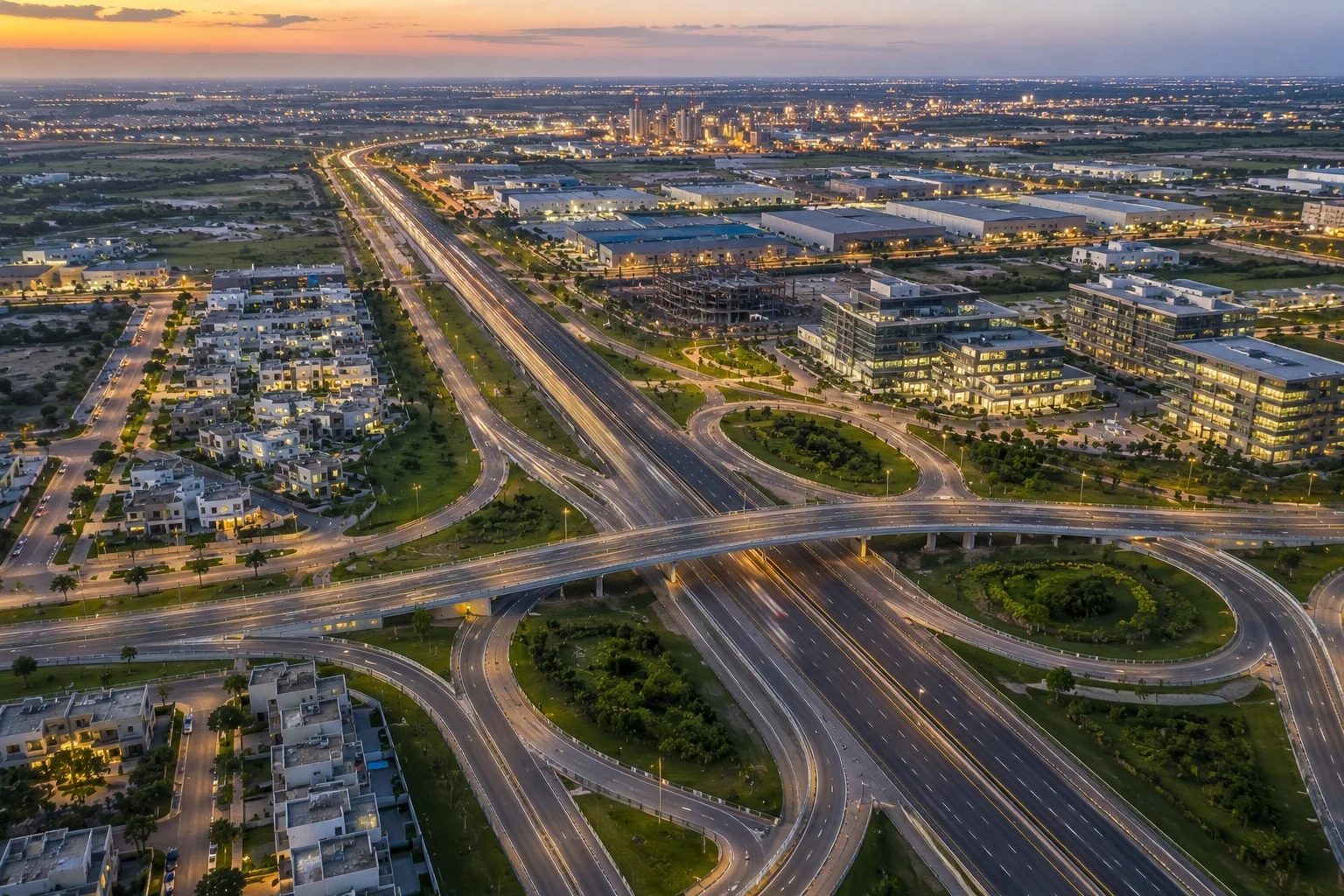
Another key factor supporting the idea of a new growth cycle in the Punjab property market is large-scale infrastructure development. Road networks, motorways, industrial zones, and commercial hubs are improving connectivity across major cities.
Improved transportation links have significantly reduced travel time between urban centers and suburban housing societies. This has increased the attractiveness of previously underdeveloped areas, turning them into potential investment hotspots.
For example, areas near new motorway interchanges and industrial corridors are now experiencing higher demand and rising property prices. Infrastructure development is directly contributing to real estate growth and shaping long-term investment patterns.
Policy Reforms and Market Transparency
Government policies and regulatory changes are also influencing the Punjab property market trends. Recent reforms aimed at improving transparency, digitizing land records, and simplifying property transfers have positively impacted investor confidence.
Key improvements include:
- Better documentation of property transactions
- Digital land record systems
- Reduced chances of fraud and fake property files
- Faster transfer processes in certain regions
These reforms are gradually making the real estate sector more organized. A more transparent system encourages both local and overseas investors to re-enter the market, which is essential for sustained growth.
Housing Demand and Population Growth
Punjab’s growing population remains a long-term driver of real estate demand. With increasing urban migration and household formation, the need for housing continues to rise steadily.
There is already a significant housing shortage in many parts of Punjab. This gap between supply and demand is creating continuous pressure on property prices, especially in urban and semi-urban areas.
Residential demand is particularly strong in:
- Lahore suburbs
- Faisalabad housing societies
- Multan new developments
- Gujranwala industrial zones
This sustained demand ensures that the Punjab property market remains fundamentally strong, even during economic fluctuations.
Impact of Construction Costs and Inflation
While demand is rising, construction costs have also increased due to inflation and higher material prices. This has had a dual effect on the Punjab real estate market.
On one hand, higher costs slow down new construction projects. On the other hand, they increase the value of existing properties, as replacement costs become more expensive.
This situation often leads investors to shift toward real estate as a relatively safer long-term asset. As a result, property investment in Punjab continues to attract attention, even during economic uncertainty.
Emerging Investment Hotspots in Punjab
Another sign of a potential new growth cycle is the emergence of new investment hotspots beyond traditional urban centers.
Previously, Lahore dominated real estate activity. Now, secondary cities are gaining attention due to affordability and development potential.
Some emerging areas include:
- Faisalabad industrial corridors
- Sialkot industrial zones
- Bahawalpur planned housing societies
- Gujranwala suburban expansions
Are We Really Entering a New Growth Cycle?
Based on current indicators, the Punjab property market is showing early signs of entering a new growth cycle, but it is still in a transition phase rather than a full boom.
Positive indicators include:
- Rising transaction activity
- Infrastructure expansion
- Improved policy framework
- Increasing housing demand
- Renewed investor interest
However, challenges still remain:
- Economic instability
- High construction costs
- Regulatory adjustments
- Market speculation risks
This means the market is not experiencing a sudden boom but rather a gradual recovery and stabilization phase that could develop into sustained growth over time.
Future Outlook of Punjab Property Market
The future of the Punjab property market depends on how well economic conditions, government policies, and infrastructure development continue to align.
If current trends continue, the market is likely to experience:
- Steady price appreciation in key urban areas
- Increased development of housing societies
- Higher demand for commercial real estate
- More structured and transparent transactions
Long-term fundamentals such as population growth, urban expansion, and infrastructure investment strongly support continued real estate growth in Punjab.
Conclusion
The Punjab property market is showing clear signs of revival, supported by infrastructure development, rising demand, and improved investor confidence. While it may be too early to declare a full-scale boom, evidence suggests that the market is gradually entering a new growth cycle.
For investors and buyers, this phase presents both opportunities and caution. Strategic investment in emerging areas and well-developed housing societies may yield strong long-term returns as the Punjab real estate market continues its upward trajectory.
Want to know more? Check out Property Investment in Pakistan 2026: Is It Still Profitable?
Like, share and comment: Facebook, Instagram, Youtube and TikTok.


Join The Discussion