
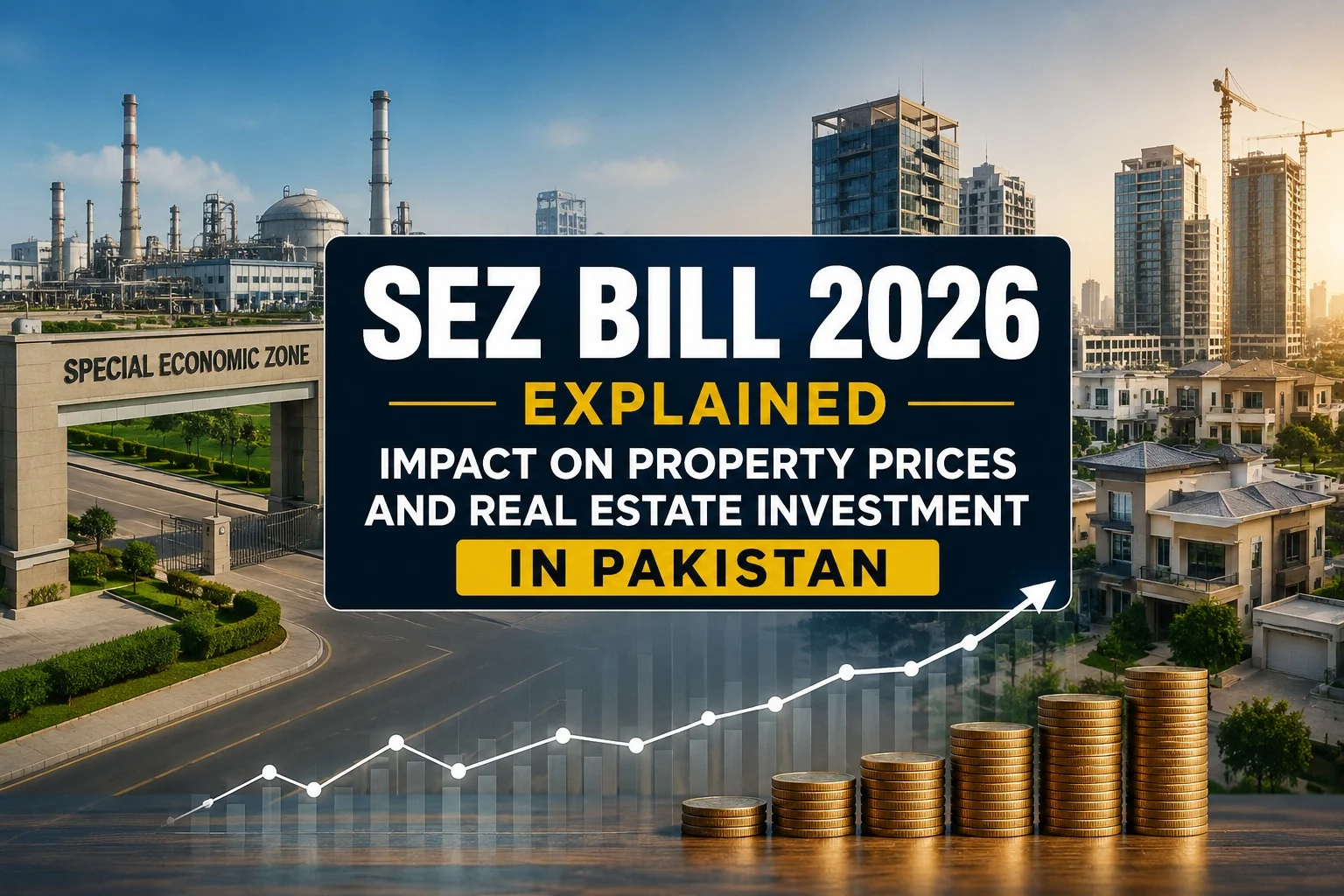
Pakistan’s real estate sector is closely linked with government policies, infrastructure development, and industrial expansion. One of the most significant recent policy developments is the SEZ Bill 2026 impact on property prices in Pakistan, which focuses on strengthening Special Economic Zones (SEZs) across the country. These zones are designed to attract local and foreign investment by offering industrial facilities, tax incentives, and improved infrastructure.
For the real estate market, especially in growing industrial cities like Faisalabad, the SEZ framework is not just an industrial policy it is a potential driver of land value appreciation, housing demand, and long-term investment opportunities.
This article explains the SEZ Bill in simple terms and explores its impact on property prices and real estate investment in Pakistan.
What is the SEZ Bill and Why It Matters?
The SEZ Bill introduces reforms aimed at improving the development and management of Special Economic Zones in Pakistan. These zones are designated industrial areas where businesses enjoy infrastructure support, tax incentives, and regulatory ease.
The main objective is to:
- Promote industrial growth
- Attract domestic and foreign investors
- Increase exports and job creation
- Improve infrastructure in underdeveloped regions
When industrial zones grow, surrounding real estate markets naturally experience increased demand.
How SEZs Influence the Real Estate Market
Special Economic Zones have a direct and indirect impact on property markets. When an SEZ is established or expanded, it creates a ripple effect across nearby areas.
1. Industrial Land Demand Increases
SEZs require large land areas for factories, warehouses, and logistics centers. As demand rises, land prices in nearby regions also increase. Investors often purchase land early to benefit from future appreciation.
2. Commercial Property Growth
Businesses supporting industrial operations such as transport companies, suppliers, and service providers require commercial spaces. This leads to increased demand for shops, offices, and warehouses.
3. Residential Housing Demand Rises
As industries develop, employment opportunities increase. Workers and professionals move closer to job locations, increasing demand for housing societies, apartments, and rental properties.
Impact of SEZ Bill 2026 on Property Prices in Pakistan
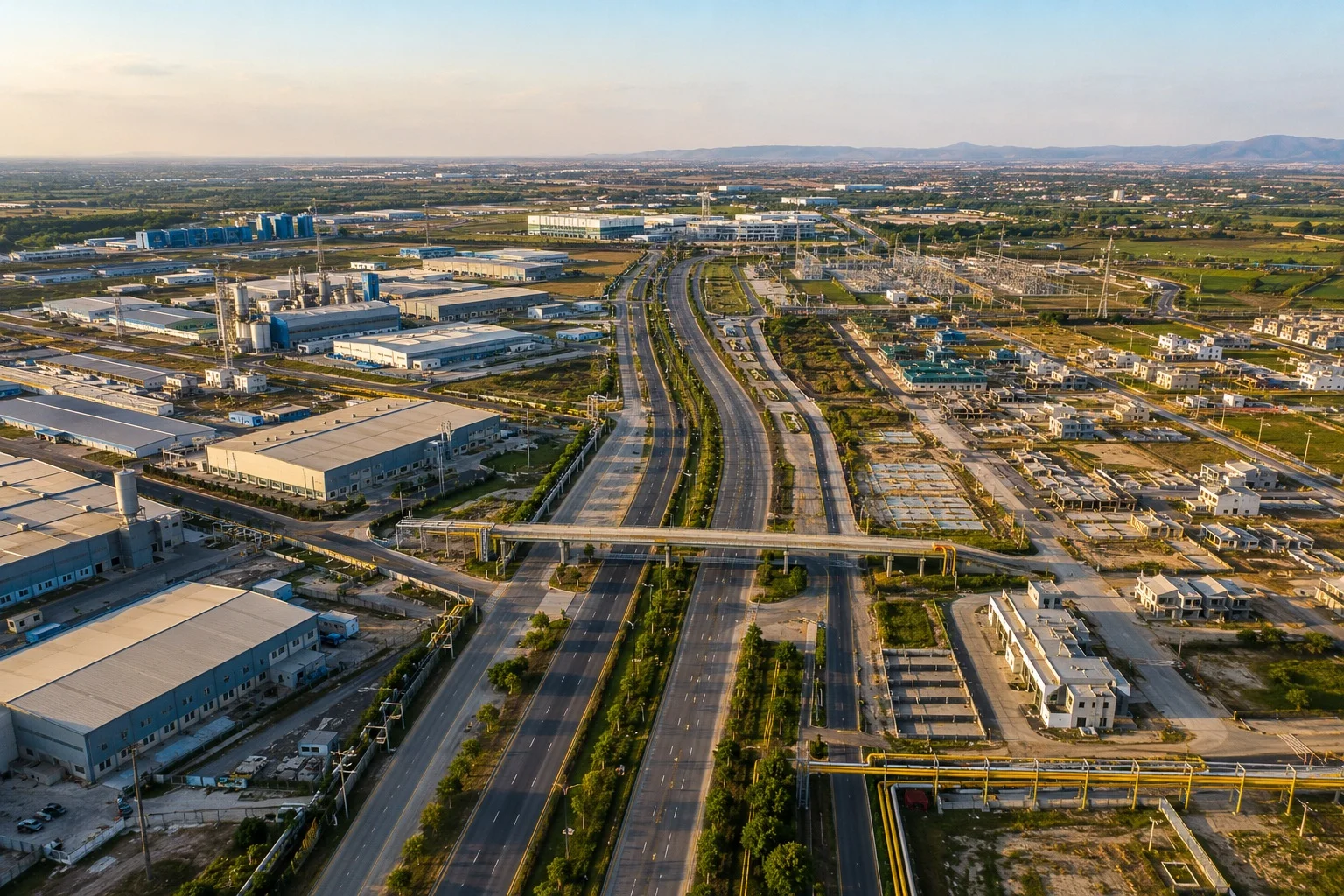
The SEZ Bill is expected to influence property prices in multiple ways:
1. Price Appreciation in Surrounding Areas
Areas near SEZs are likely to see gradual land price increases due to improved infrastructure and rising demand. Cities like Lahore and Multan may also benefit from industrial expansion corridors.
2. Infrastructure Development Boost
Government focus on SEZs includes roads, electricity, gas, and communication networks. Improved infrastructure makes nearby land more valuable and attractive for investors.
3. Long-Term Investment Stability
Unlike speculative real estate trends, SEZ-driven growth is linked to industrial activity. This makes property investment in surrounding areas more stable and long-term in nature.
Real Estate Investment Opportunities Under SEZ Reforms
The SEZ Bill creates several opportunities for real estate investors:
Industrial Plots and Land Banking
Investors often purchase raw land near proposed SEZs before development begins. As industrial activity increases, land value typically rises significantly.
Warehousing and Logistics Investment
With growing industrial output, demand for storage and transportation hubs increases. Warehousing projects near SEZs can generate steady rental income.
Housing Societies Near Industrial Zones
Residential societies near SEZs benefit from worker housing demand. This creates opportunities for developers and long-term investors.
Commercial Property Development
Retail outlets, offices, and service centers near SEZs often experience higher occupancy rates due to increased population movement.
Risks and Considerations for Investors
While SEZ-related developments offer opportunities, investors should also consider certain risks:
1. Long Development Timelines
Industrial zones take time to become fully operational. Immediate returns may be limited.
2. Policy Uncertainty
Changes in tax policies or government incentives can affect long-term returns.
3. Location Sensitivity
Not all SEZs perform equally. Connectivity, accessibility, and infrastructure quality play a key role in success.
4. Market Speculation Risks
Rapid land buying based on speculation can lead to inflated prices in some areas.
Why Faisalabad Has Strategic Importance
Industrial cities like Faisalabad play a central role in Pakistan’s SEZ development strategy. Known as the textile hub of Pakistan, Faisalabad already has strong industrial infrastructure and labor availability.
With SEZ expansion, Faisalabad is likely to experience:
- Increased industrial investment
- Higher demand for logistics and warehousing land
- Growth in nearby residential housing societies
- Rising interest from local and overseas investors
This makes it a key city for tracking real estate investment trends under SEZ reforms.
Long-Term Outlook for Pakistan’s Property Market
The SEZ Bill supports a long-term shift in Pakistan’s real estate dynamics. Instead of purely residential-driven growth, the market is moving toward industrial-led development.
Key long-term trends include:
- Expansion of industrial corridors
- Rise in mixed-use developments
- Increased foreign direct investment (FDI)
- Growth in planned housing societies near industrial zones
- Improved regional connectivity and infrastructure networks
These trends suggest that real estate growth will be more structured and economically driven.
Conclusion
The SEZ Bill 2026 is more than an industrial policy it is a structural reform that connects industrial development with real estate growth. By improving infrastructure, attracting investment, and expanding industrial zones, it is expected to influence property prices and real estate investment in Pakistan significantly.
For investors, the key opportunity lies in identifying locations near emerging SEZs and understanding long-term development potential rather than short-term speculation. Cities like Faisalabad, Lahore, and Multan are likely to remain at the center of this transformation.
In the coming years, SEZ-driven growth could redefine how Pakistan’s real estate market evolves, making it more industrially integrated and investment-focused.
Want to know more? Check out Punjab Property Market Update: Why Real Estate Transactions Are Rising
Like, share and comment: Facebook, Instagram, Youtube and TikTok.




Join The Discussion