
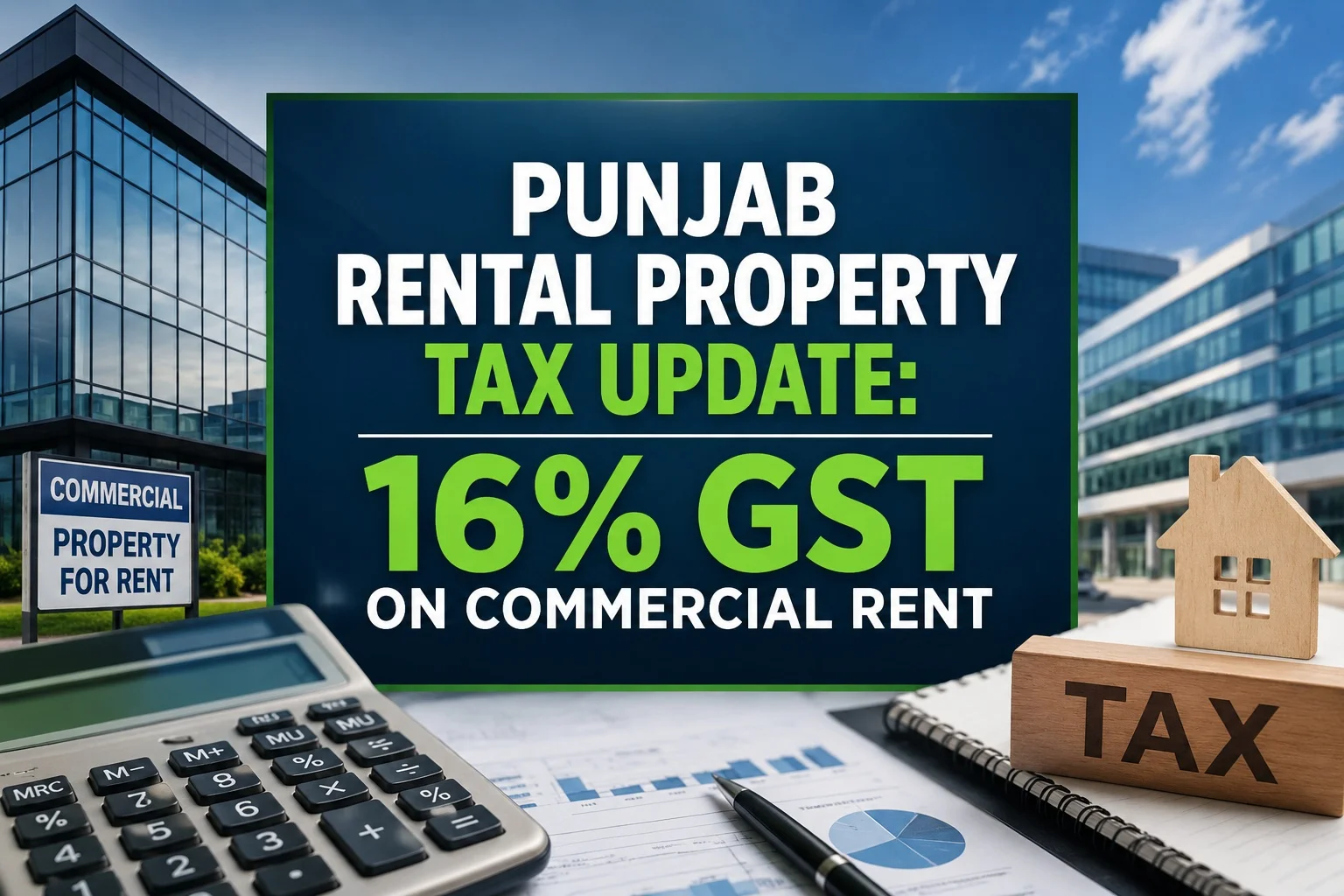
The Punjab rental property tax update 2026 marks a new phase of taxation in the Punjab real estate sector with the latest update on rental property rules. The government has confirmed the implementation of 16% General Sales Tax (GST) on commercial rent, a move that is expected to significantly impact landlords, tenants, and business owners across the province. This development is part of broader fiscal reforms aimed at improving revenue collection and expanding the tax net within the services sector.
While the policy is designed to strengthen provincial income, it has also raised concerns in the commercial property market due to its direct effect on rental costs and business operations.
What is the 16% GST on Commercial Rent?
The government applies the 16% GST on commercial rent as a sales tax on services to income generated from renting non-residential properties. Under this system, authorities treat commercial property leasing as a taxable service instead of a simple rental agreement.
This means that landlords renting out shops, offices, warehouses, plazas, and other business spaces are required to charge 16% tax on the monthly rent and submit it to the Punjab Revenue Authority (PRA).
For example, if a shop is rented for Rs100,000 per month, an additional Rs16,000 will be added as GST, making the total payable Rs116,000.
Properties Covered Under This Tax
The updated tax policy applies to a wide range of commercial properties, including:
- Retail shops and shopping outlets
- Office buildings and corporate spaces
- Commercial plazas and shopping malls
- Warehouses and storage facilities
- Any non-residential leased property used for business activities
However, residential properties used strictly for personal living remain outside the scope of this tax. This exemption is crucial as it ensures that ordinary tenants renting homes are not affected by the new tax structure.
Why Punjab Introduced This Tax
The introduction of GST on commercial rent is part of Punjab’s broader strategy to enhance revenue collection and improve compliance in the real estate sector. Previously, many rental transactions were either underreported or not fully documented, leading to revenue losses for the government.
By formalizing rental income under the sales tax regime, authorities aim to:
- Expand the tax base
- Improve transparency in property transactions
- Increase provincial revenue collection
- Align rental services with other taxable business services
This shift also moves the taxation system toward a more structured framework that treats all service-based income uniformly.
Impact on Landlords and Property Owners

For landlords, the most immediate impact is the need to adjust rental agreements and ensure proper tax compliance. Property owners must now register with the Punjab Revenue Authority and issue proper tax invoices to tenants.
While landlords are responsible for collecting the tax, the financial burden may indirectly affect rental demand. In many cases, landlords are expected to pass this cost on to tenants, which could lead to higher monthly rent prices.
Small property owners, in particular, may face challenges in understanding and implementing the new compliance requirements, especially those unfamiliar with digital tax systems.
Effect on Tenants and Businesses
The most significant concern surrounding this policy is its impact on tenants, especially businesses operating in rented spaces. For many companies, rent is already one of the largest operational expenses. The addition of 16% GST further increases the cost of doing business.
Industries likely to be affected include:
- Retail shops and shopping centers
- Restaurants and cafés
- Corporate offices and startups
- Logistics and warehouse operators
For small and medium-sized enterprises (SMEs), this added cost could reduce profit margins or force them to reconsider their locations. In competitive commercial areas, even a small increase in rent can have a major effect on business sustainability.
Market Reaction and Industry Concerns
The real estate sector has responded cautiously to the new tax update. Property dealers and business associations have raised concerns that the increased cost burden may discourage investment in commercial real estate.
Some stakeholders argue that rental income is already subject to taxation under income tax laws, and adding GST creates an overlapping tax structure. This dual taxation concern has become a major point of debate among investors and policy experts.
Despite criticism, government authorities maintain that the policy is necessary to improve financial discipline and ensure fair contribution from the services sector.
Compliance Requirements for Landlords
To comply with the new tax system, landlords must:
- Register with the Punjab Revenue Authority (PRA)
- Charge 16% GST on all commercial rental invoices
- Maintain proper documentation of rental agreements
- File regular tax returns as required by law
- Ensure transparency in rental income reporting
Failure to comply may result in penalties, fines, or legal action under provincial tax laws. As enforcement strengthens, digital monitoring systems such as E-Pay Punjab are expected to play a key role in tracking rental transactions.
Economic Implications for Punjab’s Real Estate Sector
The introduction of GST on commercial rent is likely to have both short-term and long-term effects on Punjab’s property market.
In the short term, rental prices may increase as landlords adjust to the tax. This could temporarily slow down demand in certain commercial areas, especially for small businesses.
In the long term, however, the policy may help create a more regulated and transparent property market. Investors may benefit from clearer documentation, better legal protection, and standardized rental practices.
The effectiveness of tax implementation and the market’s response to the new cost structure will determine the overall impact.
Conclusion
The Punjab Rental Property Tax Update: 16% GST on Commercial Rent marks a significant shift in the province’s real estate taxation system. While the policy aims to improve revenue collection and bring transparency to rental transactions, it also introduces new challenges for landlords and tenants.
Businesses operating in rented commercial spaces are likely to feel the immediate impact through increased costs, while landlords will need to adapt to stricter compliance requirements.
As Punjab moves toward a more structured taxation framework, the success of this policy will depend on balanced implementation that supports both government revenue goals and the stability of the real estate market.
Want to know more? Check out NAB Real Estate Reforms 2026: What’s Changing in Pakistan Property Market
Like, share and comment: Facebook, Instagram, Youtube and TikTok.



Join The Discussion