
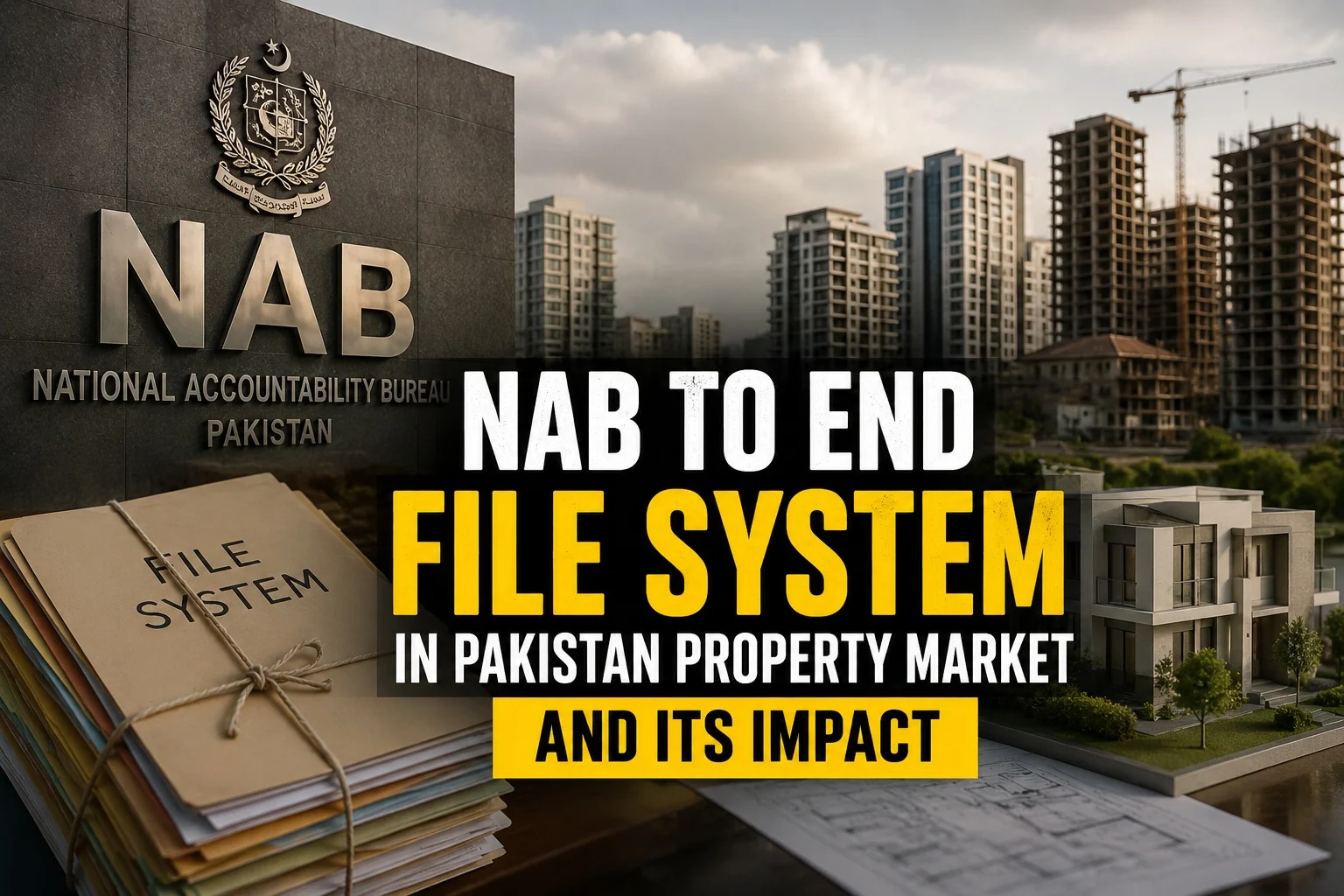
The real estate sector in Pakistan is undergoing one of its most significant regulatory shifts in recent years. The National Accountability Bureau (NAB) is reportedly moving toward ending the long-standing property file system, a practice that has shaped housing investments and speculative trading for decades. This reform, known as “NAB to end file system in Pakistan property market,” is expected to bring major structural changes to the Pakistan property market, affecting investors, developers, and buyers alike.
While the file system has played a central role in housing schemes across major cities, it has also been widely criticized for encouraging speculation, lack of transparency, and fraudulent practices. The proposed changes aim to replace this system with a more transparent and accountable real estate framework.
Understanding the File System in Pakistan Real Estate
The property file system refers to buying and selling “files” that represent plots in housing schemes, which are often not fully developed. Instead of purchasing actual land, investors buy a file that guarantees future ownership of a plot once development is completed.
Over time, this system became deeply embedded in Pakistan real estate culture. It allowed rapid trading of property files, often leading to price inflation based on speculation rather than actual development progress. Many housing societies benefited from this model, but it also created risks for investors.
One of the major issues with the file system is the lack of physical verification. In many cases, multiple files were sold for the same plot, or projects remained incomplete for years, causing financial losses for buyers.
Why NAB Wants to End the File System
The move by NAB to reform the real estate sector is primarily driven by the need for transparency and accountability. Authorities believe that the current system has enabled misuse of funds, undocumented transactions, and the growth of illegal housing schemes.
By ending the file system in Pakistan property market, regulators aim to:
- Eliminate speculative trading without real land backing
- Reduce fraud in housing schemes
- Improve documentation of property transactions
- Ensure developers deliver actual, on-ground projects
- Strengthen legal oversight in real estate investment
These reforms are also aligned with broader efforts to digitize land records and bring property transactions into formal banking channels.
Transition Toward a Digital Property System

Instead of relying on paper-based files, Pakistan’s real estate sector is moving toward a digital property registration system. Under this model, government authorities will maintain verified land records, and property ownership will be linked directly to these records.
Various institutions are already supporting this shift by digitizing land records and reforming housing regulations. Authorities are discussing digital certificates, QR-based verification systems, and centralized databases as replacements for traditional file trading.
The goal is to create a real estate environment where every plot has a clear legal identity, reducing ambiguity and minimizing the risk of fraud.
Impact on Property Investors
The impact of ending the file system will be significant for property investors, especially those who rely on short-term gains from file trading.
1. Short-Term Market Pressure
In the initial phase of reform, the market may experience instability. File-based investments could lose value as demand shifts toward verified, on-ground properties. Investors who rely heavily on speculative gains may face losses or reduced liquidity.
2. Shift in Investment Strategy
Investors are likely to move away from quick file trading and focus more on long-term property ownership. This includes investment in developed housing schemes, apartments, and legally approved projects.
3. Improved Market Confidence
While short-term uncertainty is expected, the long-term effect may improve investor confidence. A more transparent real estate system can attract both local and overseas Pakistanis who have previously been cautious due to fraud risks.
Impact on Developers and Housing Societies
Developers will face one of the biggest transformations under this reform. The file system has allowed many housing projects to generate early funding through file sales, even before development begins.
With stricter regulations in place:
- Developers will be required to prove land ownership before selling plots
- Project approvals will become more rigorous
- Selling unverified or “paper-only” plots will be restricted
- Accountability for delayed development will increase
This means only serious and financially stable developers will likely thrive in the new environment.
Smaller or unregulated housing societies may struggle to adapt, especially those that rely heavily on file-based sales.
Broader Impact on Pakistan Property Market
The Pakistan property market is expected to experience both challenges and opportunities as a result of this reform.
Positive Outcomes:
- Increased transparency in real estate transactions
- Reduction in fake and illegal housing schemes
- Better protection for property buyers
- Shift toward documented and traceable investments
Challenges:
- Short-term slowdown in trading activity
- Adjustment period for developers and investors
- Potential resistance from stakeholders benefiting from the old system
Despite these challenges, the market is moving toward long-term stability and regulation.
Will Property Prices Be Affected?
One of the most frequently asked questions is whether property prices will fall after the end of the file system. The answer is not straightforward.
In the short term, prices of file-based assets may decline due to reduced speculative demand. However, in the long run, on-ground property values may become more stable and realistic. Prices will likely reflect actual development, location, and demand rather than speculation.
This shift can help reduce artificial inflation in the real estate sector, making it more accessible for genuine buyers.
Future of Real Estate in Pakistan
The future of Pakistan real estate appears to be moving toward a more regulated and technology-driven system. With NAB-led reforms, the focus is shifting from informal trading practices to structured property management.
Key trends expected in the coming years include:
- Expansion of digital land record systems
- Greater role of banking channels in property transactions
- Stronger enforcement against illegal housing schemes
- Increased investor protection laws
- More transparency in housing project approvals
These developments indicate a gradual transformation of the sector into a more formal and reliable investment market.
Conclusion
The decision to end the file system in Pakistan property market represents a major turning point for the country’s real estate industry. The transition may create short-term disruption, but it aims to address long-standing issues of fraud, speculation, and lack of transparency.
For investors, developers, and buyers, the key will be adaptation. Those who align with the new regulatory environment are likely to benefit from a more secure and stable property market in the long run.
Ultimately, NAB’s reform efforts aim to reshape Pakistan’s real estate sector into a more transparent, accountable, and investment-friendly ecosystem.
Want to know more? Check out Why Property Files Get Delayed in Pakistan: Reasons & Easy Fixes
Like, share and comment: Facebook, Instagram, Youtube and TikTok.




Join The Discussion