
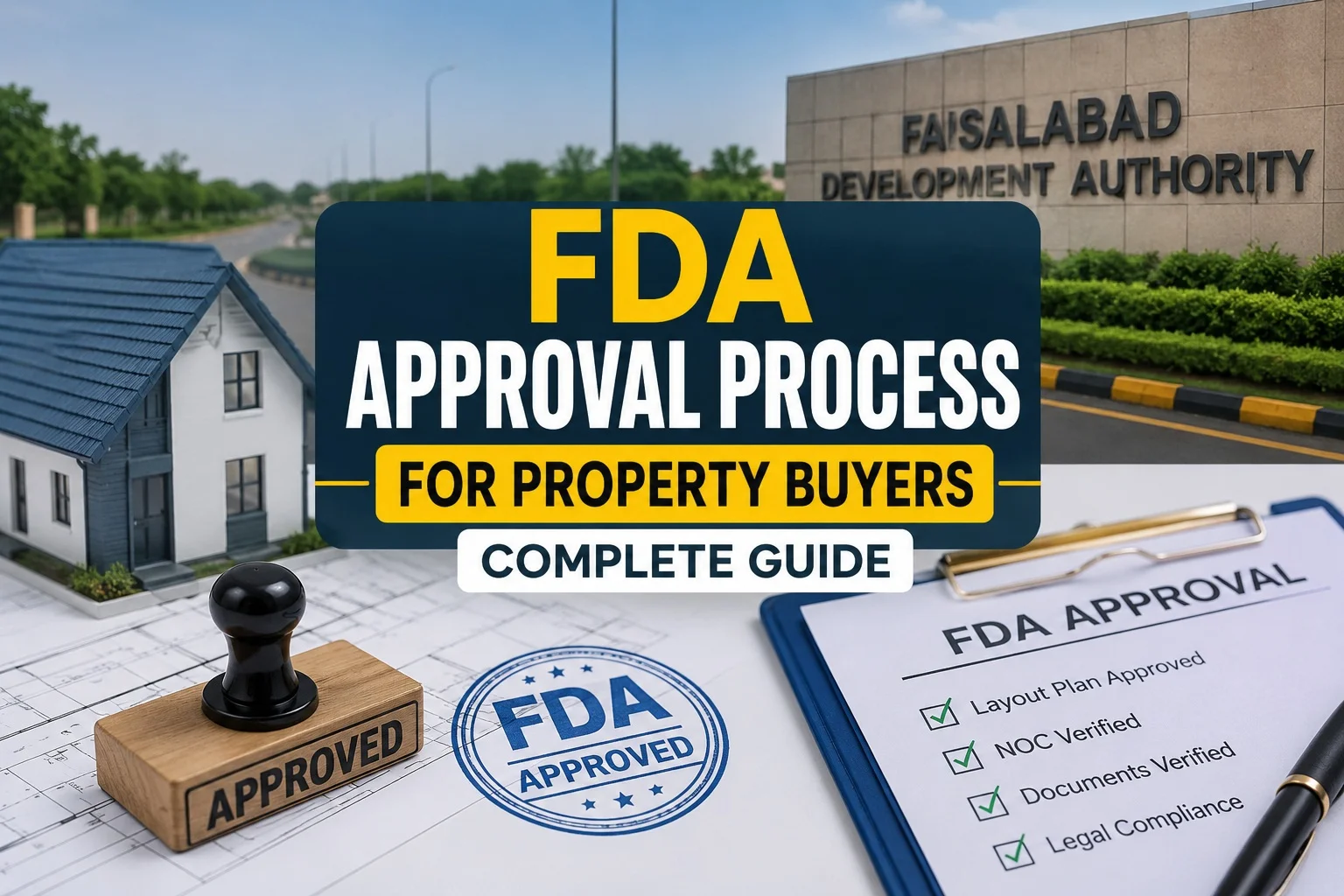
Buying property is one of the biggest financial decisions most people make. Understanding the FDA Approval Process for Property Buyers is essential before purchasing a residential plot, commercial property, or investing in a housing society. Verifying legal approvals should always be your first priority, yet many buyers focus only on location, price, and future returns while overlooking one crucial step checking whether the project has received approval from the Faisalabad Development Authority (FDA). Taking the time to verify a project’s approval status can help you avoid legal complications, reduce investment risks, and make a more informed real estate decision.
Understanding the FDA approval process for property buyers helps you avoid fraudulent projects, protect your investment, and ensure the property complies with local development regulations. This guide explains what FDA approval means, why it matters, how the approval process works, and the steps every buyer should take before making a purchase.
What Is FDA Approval?
The Faisalabad Development Authority (FDA) is responsible for regulating urban planning and development within its jurisdiction. Before a housing society or real estate project can legally develop and sell plots, it must obtain the necessary approvals from the authority.
FDA approval confirms that a housing scheme meets planning standards, infrastructure requirements, and legal regulations. It also indicates that the developer has submitted the required documentation and fulfilled the conditions established by the authority.
However, buyers should remember that different approvals may apply at different stages of a project’s development. Therefore, it is always wise to verify the latest approval status before investing.
Why FDA Approval Is Important for Property Buyers
Purchasing property in an FDA-approved housing society offers several advantages that help safeguard your investment.
Legal Protection
Approved projects comply with local planning regulations and development standards. This reduces the chances of legal disputes regarding land ownership or unauthorized development.
Lower Investment Risk
Illegal or unapproved housing societies may face penalties, development restrictions, or cancellation of approvals. Buying in an approved project minimizes these risks.
Better Infrastructure
FDA-approved projects generally follow approved layout plans and development guidelines. Buyers are more likely to receive essential facilities such as:
- Wide roads
- Sewerage systems
- Electricity
- Water supply
- Parks
- Public spaces
Easier Property Transactions
Banks, financial institutions, and future buyers often prefer properties located in legally approved housing societies. This can make resale and financing much easier.
Understanding the FDA Approval Process

Although every project may have unique requirements, the FDA approval process generally follows several important stages.
1. Land Ownership Verification
The developer must establish clear ownership of the land intended for development. All ownership documents must comply with applicable property laws.
2. Submission of Development Plans
Developers submit detailed planning documents, including:
- Layout plans
- Land use plans
- Road network designs
- Utility infrastructure
- Public facilities
- Drainage systems
These documents help the authority evaluate whether the project meets urban planning requirements.
3. Technical Review
FDA experts examine the submitted plans to ensure compliance with zoning regulations, development standards, environmental considerations, and public safety requirements.
If deficiencies are identified, the developer may be required to revise the plans before approval continues.
4. Required Clearances
Depending on the nature and location of the project, developers may need additional permissions from relevant government departments before receiving final approval.
5. Approval and Development Permission
Once all legal and technical requirements are satisfied, the authority grants approval, allowing the developer to proceed according to the approved plans.
Even after approval, developers are generally expected to continue complying with applicable regulations throughout the project’s development.
Documents Buyers Should Verify
Before purchasing property, request copies of relevant documents from the developer or seller.
Important documents include:
- FDA approval or approval status
- No Objection Certificate (NOC), if applicable
- Approved layout plan
- Ownership documents
- Sale agreement
- Plot allocation documents
- Development plan
- Utility approvals (where applicable)
Never rely solely on verbal assurances or marketing brochures.
How to Verify FDA Approval
Verifying a project’s legal status is an essential part of property due diligence.
Here are practical steps buyers can follow:
Ask the Developer
Request official approval documents instead of relying on advertisements or promotional claims.
Verify Through Official Sources
Where verification services are available, confirm the project’s approval status through the relevant government authority instead of depending on third-party information.
Compare Documents
Ensure the plot number, project name, location, and approved layout plan match the information provided by the seller.
Seek Professional Advice
If you’re uncertain about legal documents, consider consulting a qualified property lawyer or real estate professional before signing any agreement.
Warning Signs of an Unapproved Housing Society
Recognizing potential red flags can help you avoid costly mistakes.
Be cautious if you notice:
- Unusually low prices compared to nearby projects
- Refusal to provide approval documents
- Pressure to make immediate payments
- Frequent changes in project plans
- Unclear ownership information
- Aggressive marketing without legal evidence
- Promises of unrealistic investment returns
If something seems too good to be true, it deserves careful investigation.
Common Mistakes Property Buyers Should Avoid
Many buyers unknowingly increase their risk by skipping important verification steps.
Avoid these common mistakes:
Buying Based Only on Price
Affordable prices can be attractive, but they should never replace legal verification.
Ignoring Documentation
Always review property documents carefully before making any payment.
Trusting Verbal Promises
Sales representatives may provide useful information, but every important claim should be supported by official documentation.
Skipping Due Diligence
Proper property verification requires time, but it can save you from significant financial losses later.
Benefits of Buying Property in an Approved Housing Society

Choosing an approved housing society provides long-term advantages beyond legal compliance.
These benefits include:
- Greater investment security
- Improved resale opportunities
- Higher buyer confidence
- Better infrastructure development
- Increased market demand
- Reduced legal complications
- Better access to financing in many cases
- Higher long-term property value potential
While no investment is completely risk-free, purchasing property in a legally approved project generally offers greater peace of mind.
Tips for First-Time Property Buyers
If you’re buying property for the first time, keep these practical tips in mind:
- Verify all legal documents before paying any booking amount.
- Confirm the project’s approval status through reliable sources.
- Compare multiple housing societies before making a decision.
- Read the sale agreement carefully.
- Keep copies of every document and payment receipt.
- Never rush into an investment because of limited-time offers.
- Consult professionals whenever you have doubts.
A careful approach today can help prevent expensive legal and financial problems in the future.
Conclusion
Understanding the FDA approval process for property buyers is an important step toward making a safe and informed real estate investment. Verifying approvals, reviewing legal documents, and conducting proper due diligence can significantly reduce the risk of purchasing property in unauthorized housing societies.
Instead of relying solely on advertisements or verbal assurances, always confirm that the project has the necessary approvals and complies with applicable development regulations. Taking the time to verify a property’s legal status today can protect your investment, simplify future property transactions, and provide greater confidence in your buying decision.
Whether you are purchasing your first plot or expanding your real estate portfolio, making informed decisions based on proper verification is one of the smartest ways to invest in property.
Want to know more? Check out How to Choose the Right New Faisalabad Housing Scheme Before Investing.
Like, share and comment: Facebook, Instagram, Youtube and TikTok.



Join The Discussion