

Punjab’s real estate sector is going through one of its biggest regulatory shake-ups in years. Between mid-2025 and mid-2026, the provincial government approved a series of amendments to the Punjab Private Housing Schemes Rules, rolled out a digital verification system for housing societies, and launched fresh enforcement drives against illegal developers. If you own property in a private housing scheme, are planning to invest, or manage a housing society yourself, these changes directly affect you and missing a deadline could mean fines or legal action.
Why Punjab Overhauled Its Housing Scheme Rules
For years, Punjab’s housing sector struggled with a familiar set of problems: unapproved housing schemes launched without proper clearance, fake property files, forged ownership documents, double-booked plots, and buyers who lost their life savings to developers who never had legal authorization in the first place. Development authorities like the Lahore Development Authority (LDA) and Rawalpindi Development Authority (RDA) found thousands of schemes operating illegally or without complete approvals across the province.
To fix this, the Punjab Cabinet approved sweeping reforms to the Punjab Private Housing Schemes Rules, 2022, aimed at closing the loopholes that let unregulated developers operate for years before facing consequences. The goals, officials say, are simple: more transparency, stronger buyer protection, and a regulatory system that catches problems before schemes are marketed to the public not years afterward.
What’s New: Digital Approvals and Housing Scheme Categories

One of the biggest structural changes is the shift to a fully digital approval process. Instead of paper-based applications routed through multiple departments, all new housing scheme applications and revisions to existing projects now move through a centralized online platform. This is expected to cut down approval timelines, reduce manual delays, and make it harder for developers to quietly bypass individual departments.
The updated rules also introduce standardized procedures for No Objection Certificates (NOCs), so approvals from departments like Environment, Irrigation, WASA, and Solid Waste Management follow a uniform process rather than varying case by case.
Housing schemes themselves are now divided into four distinct categories:
- Schemes under 100 kanals
- Farm housing schemes
- Apartment projects
- Low-cost/affordable housing schemes
Projects involving more than five landowners must now register as a company or cooperative society, and joint ventures are capped at five entities a move designed to add legal accountability to larger developments that previously operated as loose informal partnerships.
Stricter Land-Use and Infrastructure Requirements

The new rules go well beyond paperwork. Developers must now allocate specific portions of land for parks, playgrounds, graveyards, public buildings, and waste management facilities. Open spaces must make up 5% to 7% of most schemes, rising to at least 10% for apartment projects, while graveyards must cover a minimum of 2% of total land. Commercial use is capped between 5% and 10%, and public buildings between 2% and 3%.
Utility installation has also been tightened water, gas, electricity, sewerage, telecom, and internet lines must now be laid underground before any road construction begins, replacing the overhead wiring common in older schemes. Developers are additionally required to secure environmental clearance within six months of approval and obtain sign-off from every relevant regulatory agency before marketing a project.
Fines and Penalties for Non-Compliance
Enforcement is where these reforms have real teeth. Developers running illegal schemes, or those who cause delays in meeting approved timelines, now face daily fines ranging from Rs. 5,000 to Rs. 20,000 depending on the scale of the violation. This is a significant escalation from earlier enforcement, which relied largely on show-cause notices and slow-moving legal proceedings.
Once a housing scheme is completed, it will be formally handed over to a seven-member management committee made up of sponsors and residents, who take on responsibility for ongoing maintenance and financial oversight closing another gap where developers historically walked away after selling plots, leaving residents with no formal governance structure.
HSMS: The August 31, 2026 Compliance Deadline
Alongside the rule changes, Punjab has ordered strict enforcement of the Housing Societies Management System (HSMS), a digital platform meant to end the long-running problem of fake files and fraudulent transfers. Under this order, every private housing society must upload its complete purchase and sale records to HSMS by August 31, 2026.
Each Property Certificate generated through this system will be linked to NADRA records, digital mapping data, and the e-Registry platform creating a single verifiable database that buyers, banks, and authorities can all check against. Societies that miss the deadline risk legal action under the LDA Act, 1975, including the sealing of society offices and formal legal cases against management. Several housing societies in Lahore have already completed the transfer of their records, setting a compliance benchmark for others still catching up.
In a related move, Lahore now recognizes the Property Certificate as the only legally valid proof of ownership across all housing schemes, private societies included a change intended to reduce the disputes and overlapping ownership claims that have historically clogged Punjab’s courts.
Crackdown on Illegal Housing Schemes
While legitimate societies work through digital compliance, development authorities are simultaneously targeting schemes operating without approval. The Rawalpindi Development Authority, for instance, issued show-cause notices to more than a dozen housing schemes and sub-divisions found violating the Punjab Development of Cities Act and the Private Housing Scheme Rules citing unauthorized development, illegal plot bookings, and unlawful marketing, including advertisements circulated on social media.
Authorities have also referred illegal advertising cases to agencies like the National Accountability Bureau, the Federal Investigation Agency, and Cyber Crime units, signalling that enforcement now extends beyond local development authorities into federal oversight.
What This Means for Buyers, Developers, and Society Managements
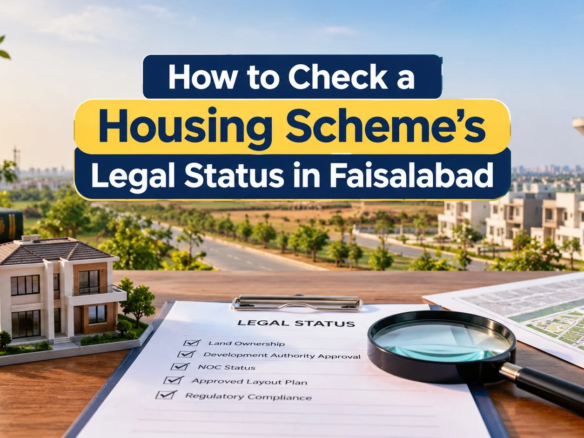
If you’re a buyer or investor, the biggest takeaway is verification: check whether a housing scheme has proper NOC and approval before booking a plot, and confirm whether it’s registered on HSMS. If you’re part of a housing society management, the priority is meeting the August 31 upload deadline to avoid legal exposure. And if you’re a developer, the message from Punjab’s government is unambiguous unauthorized development now comes with faster, costlier consequences than before.
Punjab’s housing sector has needed this kind of structural reform for a long time. Whether it delivers lasting transparency will depend on how consistently these rules are enforced once the initial compliance deadlines pass but for now, the direction is clear: verify before you invest, and comply before the deadline.
Frequently Asked Questions (FAQs)
1. What are the New Punjab Private Housing Rules 2026?
The New Punjab Private Housing Rules 2026 introduce digital approval processes, standardized NOC procedures, mandatory HSMS compliance, stricter land-use regulations, underground utility requirements, and higher penalties for illegal housing schemes. These reforms aim to improve transparency and protect property buyers.
2. What is HSMS, and why is it important?
The Housing Societies Management System (HSMS) is a digital platform where private housing societies must upload their property purchase and sale records. It helps verify property ownership, reduce fraud, and create a centralized database linked with NADRA, digital mapping, and the e-Registry system.
3. What is the HSMS compliance deadline for housing societies?
Private housing societies are required to upload their complete property records to HSMS by August 31, 2026. Societies that fail to comply may face legal action, including the sealing of offices and proceedings under the LDA Act, 1975.
4. What penalties do developers face for violating the new rules?
Developers operating illegal housing schemes or failing to meet approved timelines may face daily fines ranging from Rs. 5,000 to Rs. 20,000, depending on the nature of the violation.
5. What is the Property Certificate under the new rules?
The Property Certificate is recognized as the legally valid proof of property ownership in Lahore’s housing schemes. It is linked with digital government records to improve ownership verification and reduce property disputes.
6. What changes have been made to the housing scheme approval process?
The approval process has shifted to a centralized digital system, making applications more transparent and efficient. The updated rules also standardize NOC procedures across different government departments.
7. How can property buyers stay safe under the new Punjab housing rules?
Before buying property, buyers should verify that the housing scheme has the required approvals and NOC, confirm its HSMS registration where applicable, and carefully review all legal documents. These steps can help reduce the risk of investing in unauthorized housing schemes.
8. Why did the Punjab government introduce these housing reforms?
The reforms were introduced to address issues such as illegal housing schemes, fake property files, forged ownership documents, and fraudulent plot sales. The updated rules aim to increase transparency, strengthen buyer protection, and improve regulation across Punjab’s real estate sector.
Conclusion
Punjab’s New Private Housing Rules 2026 mark a significant shift toward a more transparent, digitally managed, and buyer-focused real estate sector. The updated regulations introduce digital approvals, standardized NOCs, stricter land-use requirements, mandatory HSMS integration, Property Certificates, and stronger penalties for non-compliance, helping reduce fraudulent housing schemes and improve regulatory oversight.
Whether you are a property buyer, investor, developer, or part of a housing society management, understanding these new rules is essential before making any real estate decision. Always verify that a housing scheme has the required approvals before purchasing property. Check whether it complies with the Housing Societies Management System (HSMS) and carefully review all legal documents. Staying informed about the latest Punjab housing regulations can help protect your investment. It can also reduce legal risks and help you make confident property decisions in 2026 and beyond.
Want to know more? Check out How to Verify a Housing Society Before Investing: A Complete Guide to Avoid Property Scams.
Like, share and comment: Facebook, Instagram, Youtube and TikTok.



Join The Discussion