
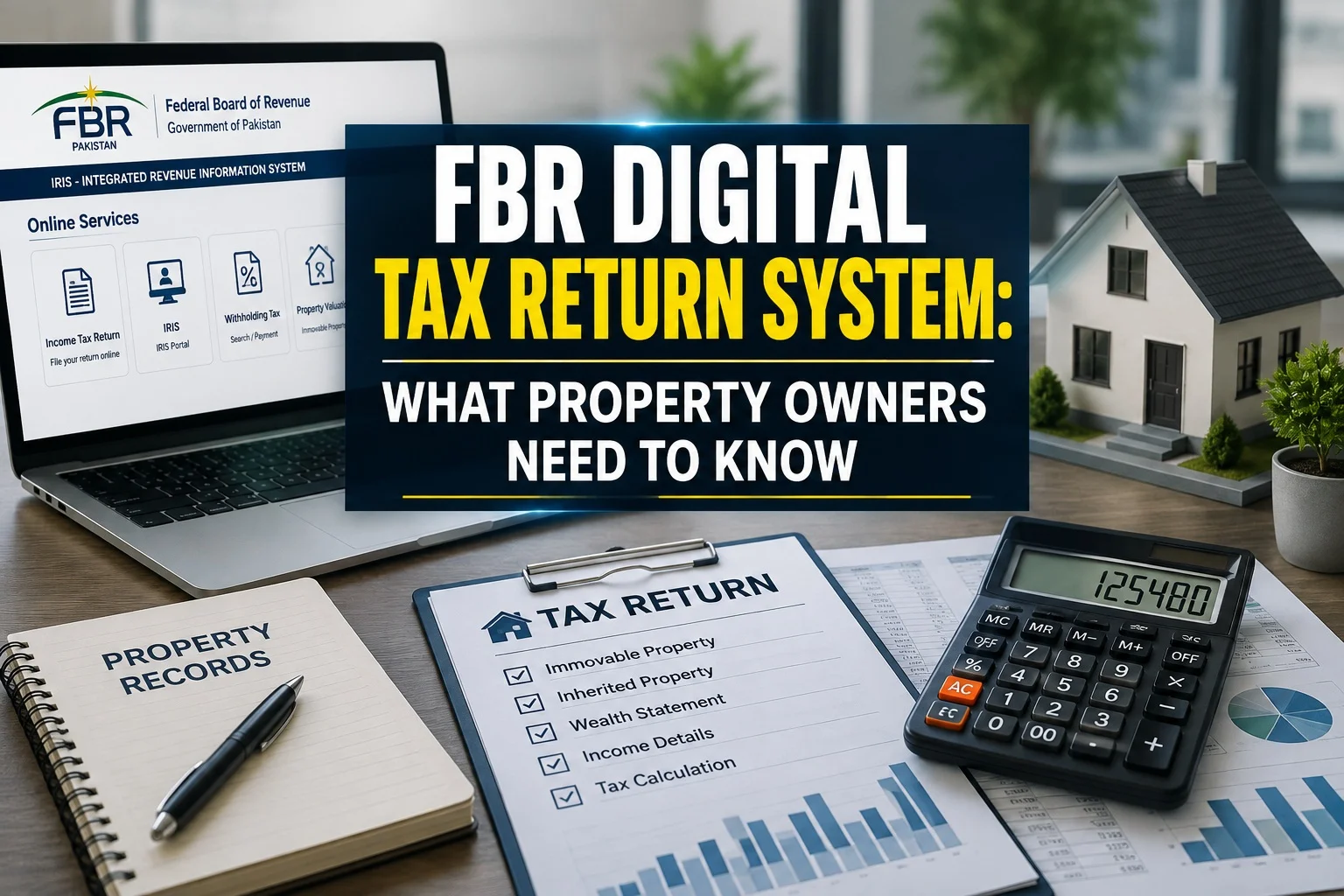
The Federal Board of Revenue (FBR) is moving toward a more digital and structured tax filing system through the FBR Digital Tax Return System, with property information becoming an increasingly important part of taxpayer records. For property owners, investors and people who have recently inherited real estate, understanding these changes can help avoid errors when filing income tax returns.
The development comes as the FBR continues to consult tax practitioners about its digital return system. In a recent demonstration for the Karachi Tax Bar Association, FBR officials showed features for recording investments in immovable property, entering multiple business capital holdings and recording inherited property.
So, what does the FBR Digital Tax Return System mean for property owners? Here is what taxpayers should know.
What Is the FBR Digital Tax Return System?
The FBR Digital Tax Return System is part of the authority’s broader move toward electronic tax filing and improved taxpayer services. The system is designed to make it easier for taxpayers and tax practitioners to enter financial information and declare relevant assets and income.
The recent FBR demonstration showed that the system can handle different types of property-related information, including investments in immovable property and inherited assets. FBR said the consultation was intended to improve the design, functionality and overall taxpayer experience.
For property owners, this means that accurate asset information is becoming increasingly important when completing an income tax return and wealth statement.
How Does It Affect Property Owners?
Property ownership can affect a taxpayer’s overall financial position, even when the property does not generate rental income.
For example, a person may own a residential plot, house, apartment, commercial property or agricultural land. These assets may need to be reflected appropriately in the taxpayer’s records, depending on the applicable tax requirements.
The redesigned system is intended to provide mechanisms for taxpayers to record investments in immovable property. This can make property declaration more structured and help taxpayers maintain consistent financial records.
Property owners should therefore avoid treating their annual tax return as only an income-reporting exercise. Their declared assets and wealth position also matter.
Property Declaration and Wealth Statement
One of the most important areas for property owners is the wealth statement.
The FBR explains that a wealth statement must reconcile with changes in a taxpayer’s wealth from the previous year. If the wealth statement does not reconcile with income and expenses, the income tax return cannot be successfully submitted.
This is particularly relevant for someone who purchases property during the tax year.
Suppose a taxpayer purchases a house or plot. The purchase represents an addition to their assets. They should therefore maintain records showing how the purchase was financed, such as income, savings, a loan or another legitimate source of funds.
Keeping these records can make the tax filing process easier and help explain significant changes in wealth.
What About Inherited Property?
Inherited property is another important area highlighted by the new system.
During its recent demonstration, the FBR showed how inherited property can be recorded in the income tax return system.
This matters because inherited property can have a different background from a property purchased directly by the taxpayer. Property owners should maintain relevant inheritance and ownership documents and ensure that their tax records accurately reflect the asset.
Taxpayers should also distinguish between receiving inherited property and selling inherited property. Different tax considerations can apply when an inherited asset is later disposed of.
In 2026, lawmakers and tax authorities have also been discussing changes concerning the taxation and valuation of inherited properties when they are subsequently sold.
Because tax rules can change, property owners should check the latest FBR requirements or consult a qualified tax professional before filing.
Why Accurate Property Information Matters
The increasing digitisation of tax records makes accuracy more important for property owners.
Incorrect information about property ownership, purchase values, sources of funds or inherited assets can create inconsistencies between a taxpayer’s return and wealth statement.
Property owners should therefore keep important documents such as:
- Property purchase and sale agreements
- Ownership documents
- Registry or transfer records
- Inheritance documents
- Bank payment records
- Property valuation information
- Rental income records, where applicable
- Tax payment receipts
Having these documents available can make it easier to provide accurate information when filing an FBR income tax return.
Is the Digital System Only for Property Investors?
No. The digital tax return system is relevant to a much wider group of taxpayers.
A person may own a single residential property without being a professional property investor. Another taxpayer may own several plots, rental properties or commercial assets. The tax filing implications can differ depending on the individual’s income, assets and transactions.
The recent FBR demonstration also covered multiple business capital entries and tax declarations under relevant provisions, showing that the system is designed to handle different financial circumstances rather than property ownership alone.
What Should Property Owners Do Before Filing?

Property owners can take several practical steps before submitting their annual return.
First, review your property records. Make a list of properties currently owned, purchased or inherited during the relevant tax year.
Second, check your financial records. If you purchased property, make sure you can identify the source of funds used for the transaction.
Third, review your wealth statement. Changes in property ownership should make sense when compared with your income, expenses and other assets.
Fourth, keep supporting documents. Do not rely only on memory when entering property information into the digital return.
Finally, seek professional advice when necessary. Property transactions can involve income tax, capital gains tax and other tax considerations. A qualified tax practitioner can help determine the appropriate treatment for a particular transaction.
What Does This Mean for Property Buyers and Sellers?
For property buyers, the growing emphasis on digital tax records reinforces the importance of documenting property transactions properly.
Before purchasing property, buyers should keep records of the purchase price, payment method and ownership transfer. Sellers should similarly retain transaction documents and information needed to determine the relevant tax treatment.
The broader shift toward digital compliance also reflects the government’s effort to improve documentation and tax administration. The Finance Act 2026 continues this emphasis on technology, documentation and compliance.
This does not mean every property transaction automatically creates a new tax liability. Rather, taxpayers need to ensure that transactions are correctly reported according to the applicable law.
Frequently Asked Questions (FAQs)
1. What is the FBR Digital Tax Return System?
The FBR Digital Tax Return System is an electronic tax-filing framework designed to make it easier for taxpayers to submit returns and report financial information, including assets such as immovable property.
2. How do property owners declare property in an FBR tax return?
Property owners should accurately report their relevant property assets and financial information in their income tax return and wealth statement, along with maintaining supporting ownership and transaction documents.
3. Do property owners need to declare inherited property to the FBR?
Yes, inherited property may need to be reflected in the taxpayer’s records. Property owners should maintain inheritance and ownership documents and report the asset according to applicable FBR requirements.
4. What documents should property owners keep for FBR tax filing?
Property owners should keep ownership documents, purchase or sale agreements, transfer records, inheritance documents, payment records, valuation information and relevant tax receipts.
5. Does declaring property in an FBR tax return automatically create a tax liability?
No. Declaring an asset does not automatically mean additional tax is payable. The applicable tax depends on the nature of the property, transaction, income and relevant tax laws.
Conclusion
The FBR Digital Tax Return System represents another step toward more structured electronic tax filing in Pakistan. For property owners, the most important takeaway is simple: keep property ownership, investment and financial records accurate and consistent.
The FBR’s recent demonstration shows that the digital system is being developed to accommodate immovable property investments and inherited property alongside other financial information.
Property owners should therefore prepare their documents before filing, review their wealth statement carefully and avoid entering inconsistent information. For complex property transactions, professional tax advice can help ensure compliance with the latest rules.
As Pakistan’s tax system becomes increasingly digital, maintaining clear property and financial records is likely to become even more important for buyers, sellers, landlords and investors.
Want to know more? Check out FBR Property Documentation Rules Explained: What Property Buyers and Sellers Need to Know in Pakistan.
Like, share and comment: Facebook, Instagram, Youtube and TikTok.




Join The Discussion