
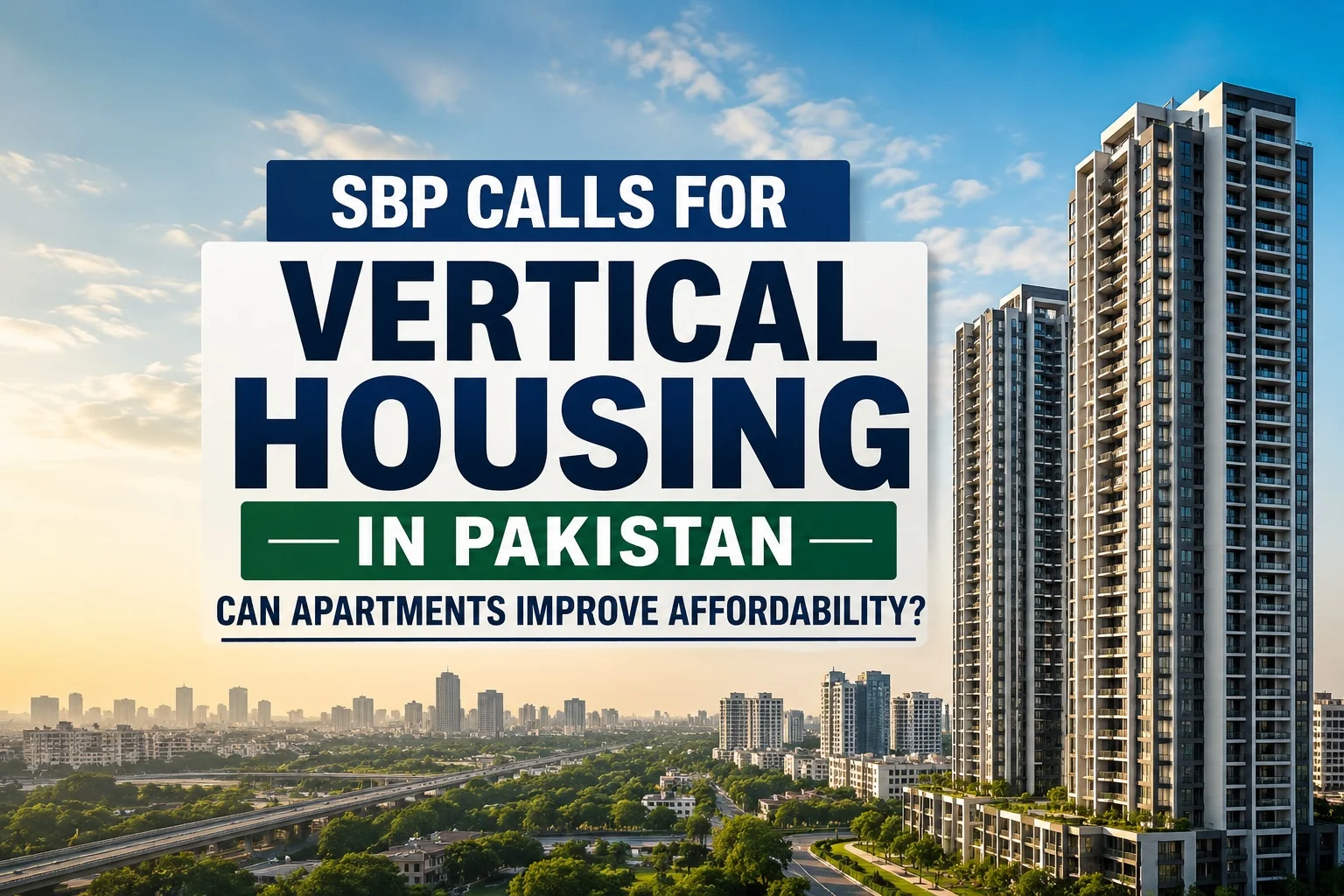
Pakistan’s housing market is facing a difficult challenge: millions of people need homes, while land, construction materials and property prices continue to make homeownership difficult for many families. As cities expand, the traditional model of building large houses on individual plots is becoming increasingly difficult to sustain.
This is where vertical housing in Pakistan is gaining attention. Apartments and other multi-storey residential developments can accommodate more families on less land, making them an important option for rapidly growing urban areas.
The State Bank of Pakistan (SBP) has also continued to support affordable housing through financing measures. In March 2026, SBP revised its affordable housing finance scheme, allowing financing for flats of up to 1,500 square feet, with the maximum loan size increased to PKR 10 million and the customer rate fixed at 5%.
But can apartments really make housing more affordable? The answer depends on how these projects are planned, financed and developed.
What Is Vertical Housing?
Vertical housing refers to residential development where multiple homes are constructed within a multi-storey building rather than spreading individual houses across large areas of land.
Apartment buildings, high-rise residential towers and multi-storey housing projects are common examples.
The main advantage is efficient land use. Instead of using a separate plot for every household, a single development can provide dozens or hundreds of residential units.
For a country experiencing urban population growth and rising land prices, this approach can potentially increase the supply of housing without requiring cities to expand endlessly outward.
Why Is Vertical Housing Important for Pakistan?
Pakistan’s major cities are under increasing pressure from population growth, limited land availability and rising property prices. In established urban areas, acquiring large plots for new housing can be expensive, making conventional houses unaffordable for many middle-income families. Vertical development offers an alternative.
By constructing apartments on smaller land footprints, developers can create more residential units in locations that would otherwise accommodate only a few houses. This can also reduce the pressure to develop distant areas on the outskirts of cities.
For buyers, the biggest potential benefit is that they may be able to purchase a smaller residential unit instead of paying for a large plot and the construction of an entire house.
Can Apartments Improve Housing Affordability?
Apartments can improve affordability, but they do not automatically guarantee cheap housing.
The biggest potential advantage is the cost of land. In a conventional housing model, the buyer often pays a significant amount for the land on which the house stands. With an apartment building, the cost of the land can be distributed among many units.
This can lower the land component of the purchase price per household.
Apartments can also reduce construction requirements for individual buyers. Instead of purchasing a plot and managing construction, a buyer purchases a completed residential unit.
However, affordability also depends on construction costs, location, developer pricing, maintenance charges, taxes, financing costs and the overall quality of the project.
Therefore, affordable apartments in Pakistan require more than simply constructing taller buildings.
SBP’s Role in Affordable Housing Finance
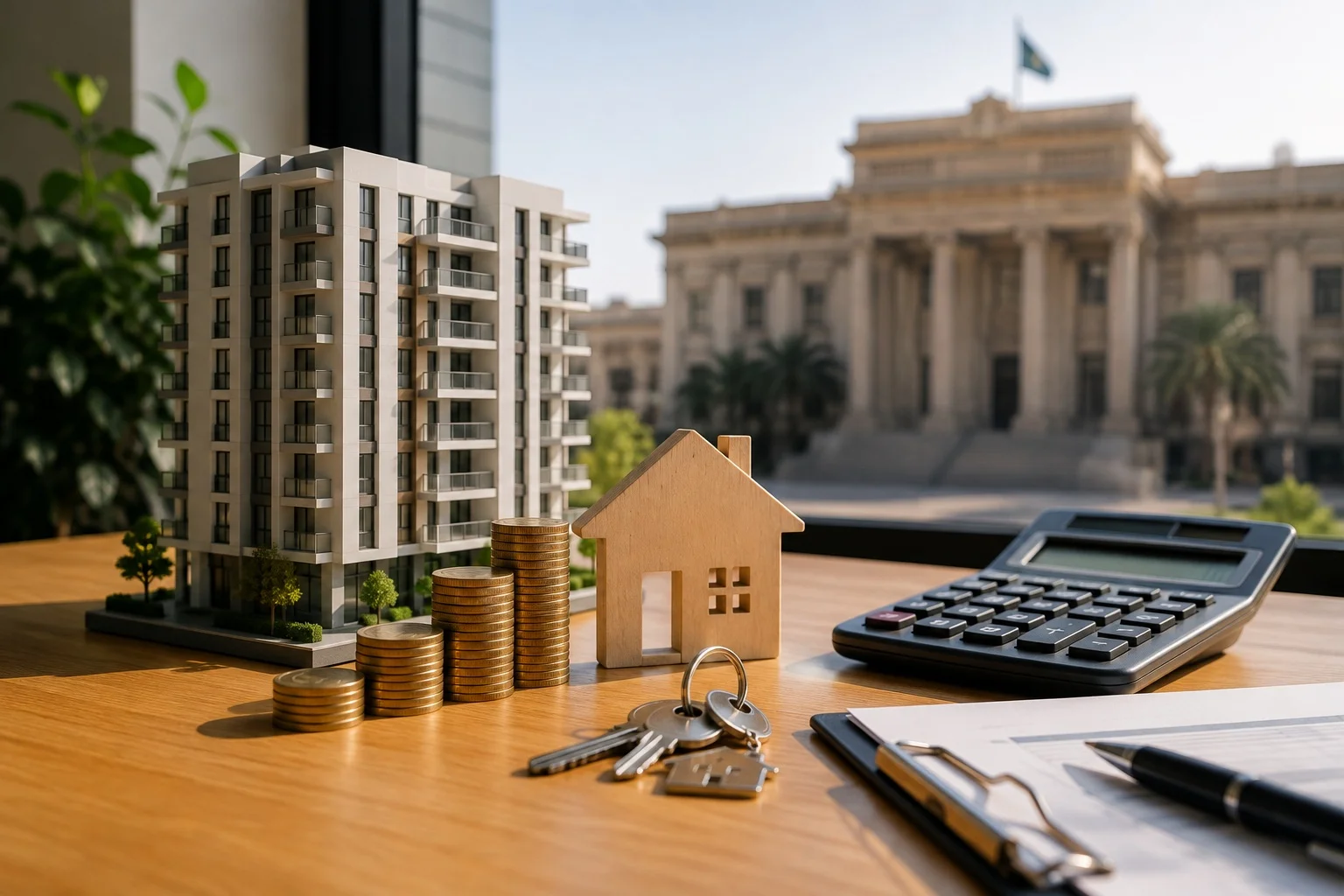
Housing finance is an important part of the affordability equation. Even when an apartment is relatively affordable compared with a house, many families may still struggle to purchase it without financing.
SBP has introduced and supported measures designed to expand access to housing finance.
Under the revised affordable housing finance scheme announced in March 2026, eligible housing units include flats up to 1,500 square feet, while the maximum loan size was increased to PKR 10 million. The customer/end-user fixed rate was also set at 5%.
SBP has also facilitated implementation of the Wazir-e-Azam Apna Ghar Program. In April 2026, it instructed participating institutions to streamline implementation, including setting a maximum 15-working-day turnaround time for credit approval once a complete application is received.
These measures are significant because apartment ownership becomes more realistic when buyers have access to predictable and affordable financing.
Benefits of Vertical Housing for Pakistani Cities
1. Better Use of Limited Land
Vertical housing allows cities to accommodate more residents without allocating a separate plot to every household.
This is particularly useful in densely populated urban areas where land is already expensive.
2. Potentially Lower Entry Costs
An apartment can have a lower upfront price than a comparable independent house because the land cost is distributed across multiple units.
This can create opportunities for first-time buyers and middle-income households.
3. More Housing Near Urban Facilities
Well-planned apartment developments can place residents closer to workplaces, schools, healthcare facilities, markets and public transportation.
Reducing the distance between housing and essential services can also lower commuting costs and time.
4. Support for First-Time Homebuyers
Smaller apartments can provide an entry point into homeownership for families who cannot afford a large house.
This becomes particularly relevant when housing finance schemes support the purchase of flats.
5. More Efficient Urban Development
Vertical development can help cities use existing infrastructure more efficiently when projects are properly planned and connected to roads, water, electricity, sewerage and public services.
Challenges of Vertical Housing in Pakistan
Despite its potential, vertical housing also comes with challenges.
One major issue is construction quality. Buyers need confidence that apartment buildings are structurally sound and developed according to approved plans and regulations.
Another concern is maintenance. Unlike independent houses, apartment residents share common facilities such as lifts, parking areas, corridors and security systems. Regular maintenance requires effective management and additional service charges.
Location is equally important. An inexpensive apartment located far from employment centres, schools and public transport may not be genuinely affordable after transportation and other costs are considered.
There is also a need for stronger planning and regulation. Developers, housing authorities and financial institutions need to ensure that apartment projects have proper approvals, infrastructure and transparent ownership documentation.
What Does Vertical Housing Mean for Homebuyers?
For homebuyers, the growing focus on apartments could create more choices in the residential market.
However, buyers should not judge an apartment only by its price or size. Before purchasing, they should check the developer’s reputation, project approvals, land ownership, completion status, utilities, maintenance charges, parking arrangements and resale potential.
Buyers should also calculate the complete monthly cost, including the loan installment, maintenance charges, utility bills and transportation expenses.
An apartment with a lower purchase price may not necessarily be the most affordable option if its location or recurring costs are significantly higher.
Could Vertical Housing Help Solve Pakistan’s Housing Shortage?
Vertical housing alone cannot solve Pakistan’s housing shortage. However, it can become an important part of a broader solution.
The country needs a combination of affordable financing, appropriate land-use planning, transparent property regulations, quality construction and housing developments designed around the needs of different income groups.
The expansion of housing finance can support demand, while vertical development can increase the supply of residential units in areas where land is scarce.
The real opportunity lies in connecting these two elements: affordable housing finance and efficient housing supply.
The Future of Apartments in Pakistan
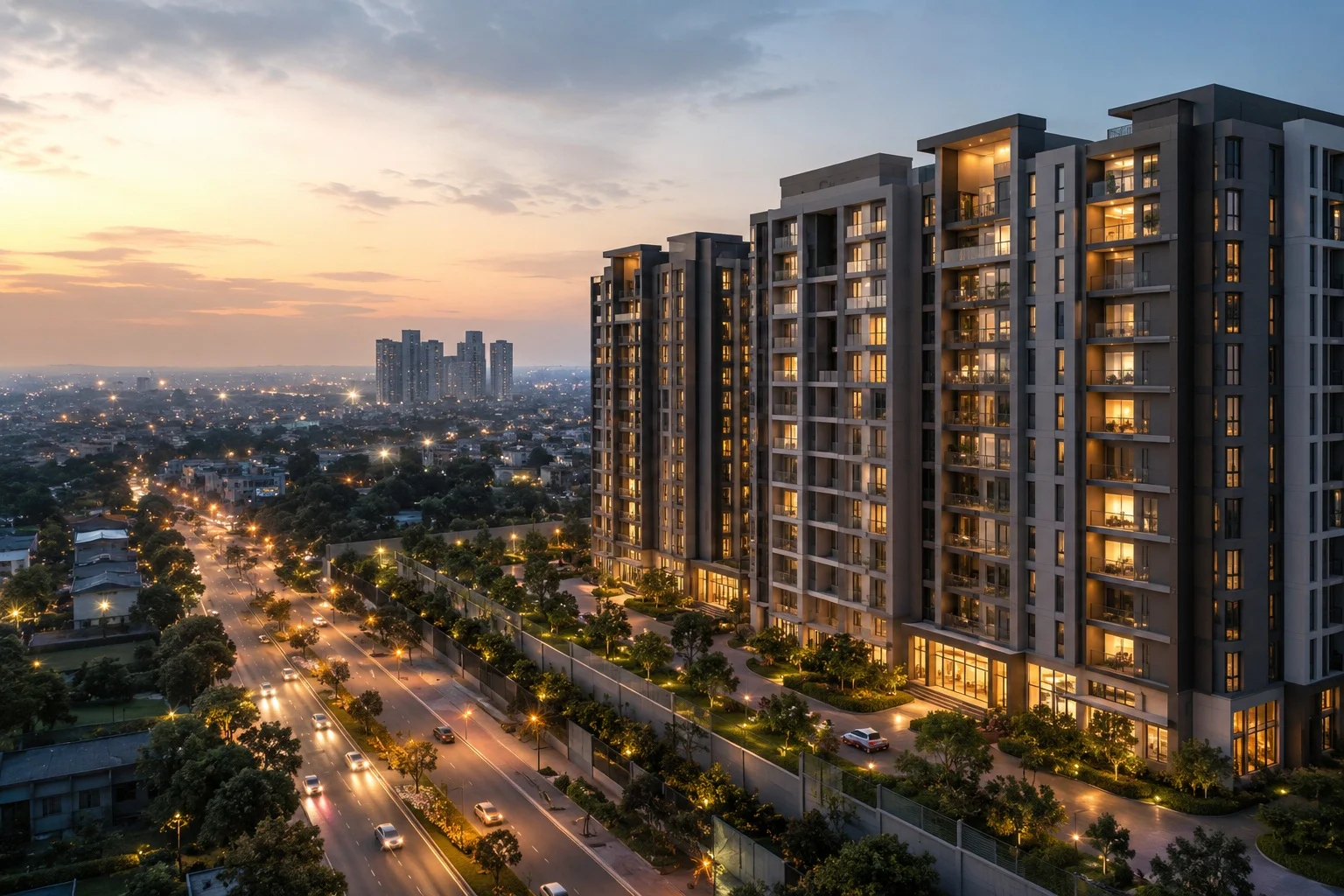
The future of apartment living in Pakistan is likely to depend on whether developers can offer reasonably priced units in well-planned locations and whether financial institutions can make home financing accessible to more households.
SBP’s recent housing-finance measures show that flats are already an important part of the affordable housing framework. The revised financing parameters specifically accommodate apartment buyers, while other measures aim to make housing finance more accessible and efficient.
For Pakistan’s growing cities, vertical housing could therefore become more than an alternative lifestyle. It could become an important component of urban housing policy.
Frequently Asked Questions
1. What is vertical housing in Pakistan?
Vertical housing in Pakistan refers to multi-storey residential developments such as apartment buildings and high-rise projects. Instead of using separate plots for individual houses, vertical housing accommodates multiple families within the same development, making more efficient use of limited urban land.
2. Can vertical housing improve housing affordability in Pakistan?
Yes, vertical housing can potentially improve affordability by distributing land and some development costs across multiple residential units. However, the final cost of an apartment also depends on location, construction costs, financing, maintenance charges and the quality of the project.
3. Why is SBP supporting affordable housing finance?
The State Bank of Pakistan supports affordable housing finance to improve access to homeownership for eligible households. Recent measures have also expanded financing options for eligible flats, making apartment ownership more accessible to some homebuyers.
4. Are apartments cheaper than houses in Pakistan?
Apartments can be more affordable than comparable houses because the cost of land is shared among multiple units. However, prices vary according to location, apartment size, project facilities, construction quality and demand. Buyers should compare the total cost before making a decision.
5. How can apartments help reduce Pakistan’s housing shortage?
Apartments can increase the number of homes available within limited urban areas. By building vertically, developers can accommodate more families on less land, potentially helping growing cities manage population growth, rising land prices and increasing housing demand.
6. What should buyers check before purchasing an apartment in Pakistan?
Buyers should verify the project’s approvals, land ownership, developer credentials, construction quality, utilities, possession status, maintenance charges, parking arrangements and financing terms. They should also consider the location, total monthly costs and potential resale value before purchasing an apartment.
Conclusion
Vertical housing in Pakistan has the potential to improve housing affordability by making more efficient use of expensive urban land and increasing the number of homes available within established cities.
Apartments can be particularly useful for first-time buyers and middle-income families when they are properly planned, reasonably priced and supported by accessible housing finance.
However, affordability should not be measured by the apartment’s purchase price alone. Location, financing costs, maintenance, infrastructure, construction quality and legal documentation all matter.
With better urban planning and continued improvements in housing finance, apartment-based development could play an increasingly important role in addressing Pakistan’s housing shortage and making homeownership more achievable for ordinary families.
Want to know more? Check out PM Apna Ghar Scheme Expands with New Vertical Housing Projects.
Like, share and comment: Facebook, Instagram, Youtube and TikTok.



Join The Discussion