
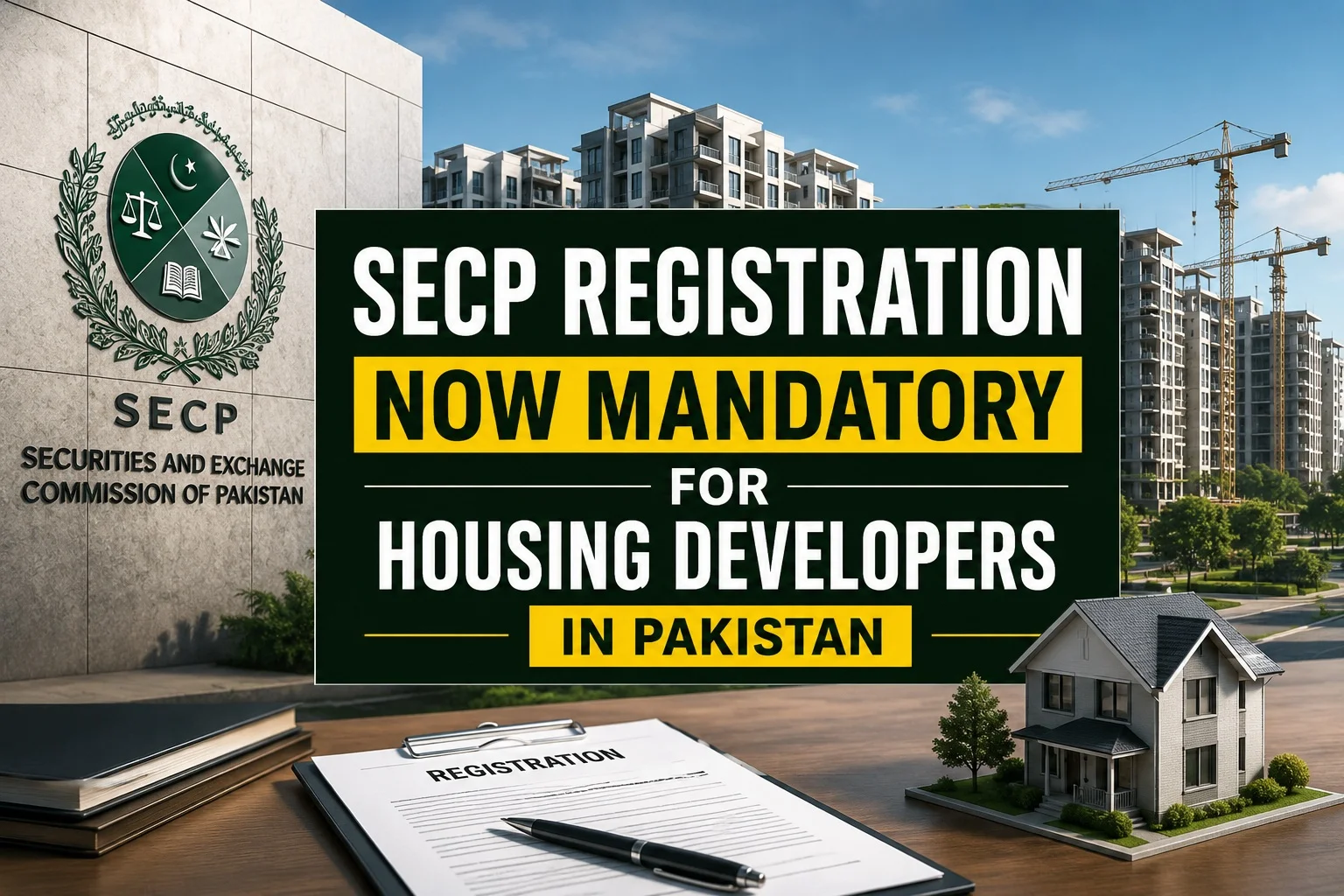
Pakistan’s real estate sector has long been one of the most active investment markets in the country. With rapid urban growth, rising population, and increasing demand for residential and commercial properties, housing projects continue to expand across major cities. However, lack of regulation, illegal housing schemes, and weak accountability have also created serious challenges for investors and authorities.
To address these issues, new reforms are being introduced, and SECP registration for housing developers in Pakistan is becoming a central requirement. This shift aims to bring transparency, improve governance, and protect investors from fraud in the property market.
Why SECP Registration Matters for Housing Developers
The Securities and Exchange Commission of Pakistan (SECP) is the country’s main corporate regulatory authority. It ensures that companies operate under legal frameworks, follow proper financial reporting, and maintain transparency in business activities.
By making registration mandatory for housing developers, the government is taking a strong step toward regulating the real estate sector. Many housing societies in the past were launched without proper legal approval, leading to financial losses for buyers and long legal disputes.
With this new approach, only properly registered developers will be allowed to operate formally, which will significantly reduce risks for investors.
Key Objectives of Mandatory SECP Registration
The introduction of mandatory SECP registration for developers is not just a bureaucratic requirement—it is a structural reform for the entire real estate sector. The main objectives include:
1. Improving Transparency
One of the biggest issues in Pakistan’s property market has been a lack of transparency. SECP registration ensures that developers are officially documented and accountable for their projects.
2. Eliminating Illegal Housing Societies
Unapproved housing schemes often mislead buyers with fake promises. With stricter regulation, illegal projects will become easier to identify and control.
3. Protecting Investors
Investor protection is a key focus. Registered developers are required to follow legal procedures, reducing the risk of fraud and ensuring safer property investments.
4. Strengthening Market Confidence
When investors trust the system, both local and overseas investment increases. A regulated market encourages long-term growth in the real estate sector.
Impact on Housing Developers in Pakistan

The requirement for SECP registration will have a significant impact on housing developers. While it may introduce new compliance responsibilities, it also brings long-term benefits.
Developers will now need to maintain proper documentation, financial records, and legal approvals before launching any housing project. This will increase operational discipline in the sector.
At the same time, registered developers will gain better credibility in the market. Buyers are more likely to invest in projects backed by legal approval and government oversight.
Benefits for Property Investors
For investors, this reform is a positive development. In the past, many individuals lost money due to fraudulent housing schemes or delayed projects. With mandatory registration, investors can now verify whether a developer is legally recognized.
Some key benefits include:
- Reduced risk of investment fraud
- Better project accountability
- Improved project delivery timelines
- Legal protection under SECP regulations
- Increased trust in housing societies
This shift is expected to make Pakistan real estate investment more secure and structured.
How SECP Registration Will Work for Developers
Under the new framework, housing developers will be required to register their companies with SECP before launching any project. This process typically includes:
- Company incorporation and legal documentation
- Submission of financial records and ownership details
- Compliance with corporate governance standards
- Approval from relevant housing authorities where required
Once registered, developers will be monitored to ensure they follow legal and financial regulations throughout the project lifecycle.
This system will bring housing development companies under formal corporate governance structures, which has been missing in many informal projects.
Role of Government and Regulatory Authorities
The government of Pakistan is actively working on strengthening real estate regulations. Along with SECP, other authorities such as development authorities and planning departments will also play a role in approving and monitoring housing projects.
This coordinated system aims to reduce duplication of approvals and create a more efficient regulatory environment. It also supports digital transformation in land and property management systems.
Such reforms are part of broader real estate sector reforms in Pakistan, focusing on transparency and modernization.
Challenges in Implementation
Although the policy is promising, there are some challenges in implementation:
- Resistance from unregistered developers
- Lack of awareness among small-scale builders
- Administrative delays in approval processes
- Need for stronger enforcement mechanisms
To make the system effective, authorities will need to ensure smooth registration processes and strict monitoring of non-compliant projects.
Future of Real Estate Sector in Pakistan
The introduction of mandatory SECP registration marks a major shift in Pakistan’s real estate landscape. Over time, it is expected to eliminate informal housing schemes and promote professionally managed development companies.
This will also encourage foreign investors, especially overseas Pakistanis, to invest in regulated and legally secure housing projects. As confidence in the system grows, the sector may experience more stable and sustainable growth.
Experts believe that structured regulation will help Pakistan align its property market with international standards, making it more attractive for long-term investment.
Conclusion
The decision to make SECP registration mandatory for housing developers in Pakistan is a significant step toward reforming the country’s real estate sector. It aims to eliminate illegal practices, improve transparency, and protect investors from financial risks.
While the transition may create short-term challenges for developers, the long-term benefits are clear: a more organized, transparent, and trustworthy property market.
For investors and developers alike, understanding and adapting to these new regulations is essential for future success in Pakistan’s evolving real estate industry.
Want to know more? Check out How to Buy Property in Punjab Safely: Step-by-Step Legal Guide to Avoid Fraud
Like, share and comment: Facebook, Instagram, Youtube and TikTok.




Join The Discussion