
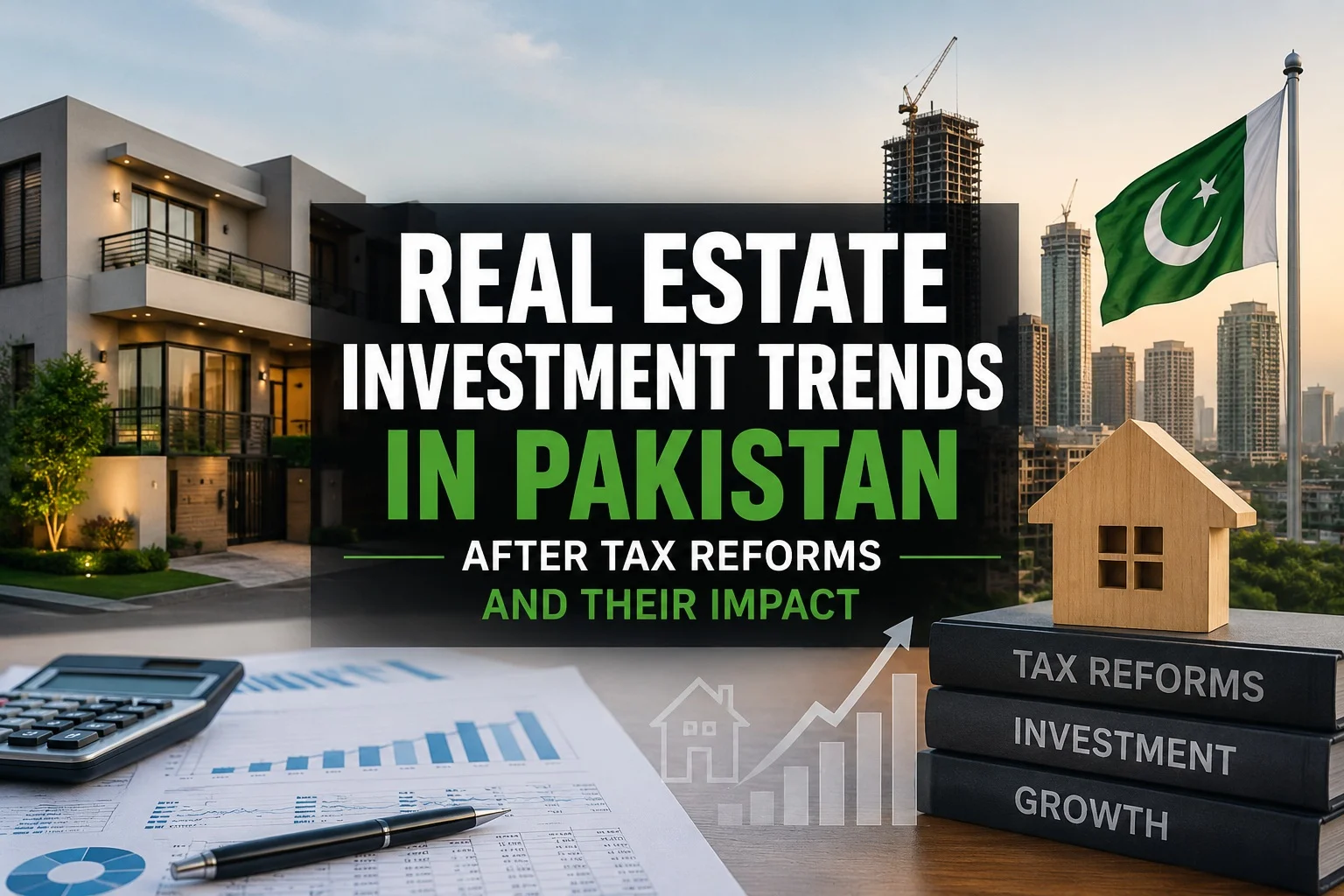
Pakistan’s real estate sector has always played a central role in wealth creation, urban development, and long-term investment planning. However, in recent years, the industry has gone through significant changes due to government-led tax reforms aimed at improving transparency, documentation, and revenue generation. These reforms have not only reshaped investor behavior but also influenced real estate investment trends in Pakistan after tax reforms, property prices, market demand, and overall investment trends.
Today, the real estate investment landscape in Pakistan is entering a new phase where compliance, digitization, and formal transactions are becoming more important than ever. This shift is creating both challenges and opportunities for investors, developers, and buyers.
Overview of Tax Reforms in Pakistan’s Property Sector
The government of Pakistan has introduced several tax-related measures over the past few years to regulate the real estate market. These include changes in capital gains tax, withholding tax, property valuation tables, and stricter documentation requirements through the Federal Board of Revenue (FBR).
One of the key objectives of these reforms is to reduce undocumented transactions and bring more transparency into property dealings. Previously, a large portion of real estate activity was conducted in cash-based or undervalued transactions. With stricter monitoring, this trend is gradually declining.
As a result, the property market is becoming more structured, and investors are now required to carefully evaluate tax implications before making investment decisions.
Shift Toward Documented and Transparent Transactions
One of the most noticeable real estate investment trends in Pakistan after tax reforms is the shift toward documented transactions. Buyers and sellers are increasingly registering their properties at official FBR rates to avoid penalties and legal complications.
This change has improved investor confidence, especially among overseas Pakistanis and institutional investors who prefer secure and transparent investment channels. Although this has slightly increased transaction costs, it has also reduced the risk of fraud and hidden ownership disputes.
The formalization of property records is also expected to improve long-term market stability.
Impact on Property Prices and Market Demand
Tax reforms have had a mixed impact on property prices in Pakistan. In the short term, higher taxes and stricter valuation policies led to reduced speculative buying. This caused a temporary slowdown in some segments of the market, especially in luxury and high-end residential projects.
However, the long-term outlook remains positive. Real demand for housing, especially in urban centers like Lahore, Karachi, Islamabad, Faisalabad, and Multan, continues to grow due to population expansion and urban migration.
Affordable housing projects and mid-range properties are experiencing more consistent demand compared to luxury developments. Investors are now focusing on projects with real utility and long-term value rather than short-term speculative gains.
Growing Interest in Commercial Real Estate
Another emerging trend in Pakistan’s property market is increasing interest in commercial real estate. Office spaces, retail outlets, warehouses, and mixed-use developments are gaining popularity among investors seeking stable rental income.
Tax reforms have encouraged investors to diversify their portfolios beyond residential plots. Commercial properties are now seen as more sustainable investments due to consistent cash flow and growing business activity in urban areas.
In particular, economic corridors and industrial zones are creating new opportunities for commercial expansion.
Overseas Pakistanis and Investment Confidence
Overseas Pakistani investors remain one of the strongest contributors to the real estate sector. After recent tax reforms, their participation has shown renewed growth, mainly due to improved documentation systems and digital property verification tools.
Many overseas buyers are now investing in reputable housing societies and large-scale development projects, where transparency and legal structure are stronger.
This trend is important because foreign remittances significantly support Pakistan’s property market and overall construction industry.
Role of Housing Societies and Urban Expansion
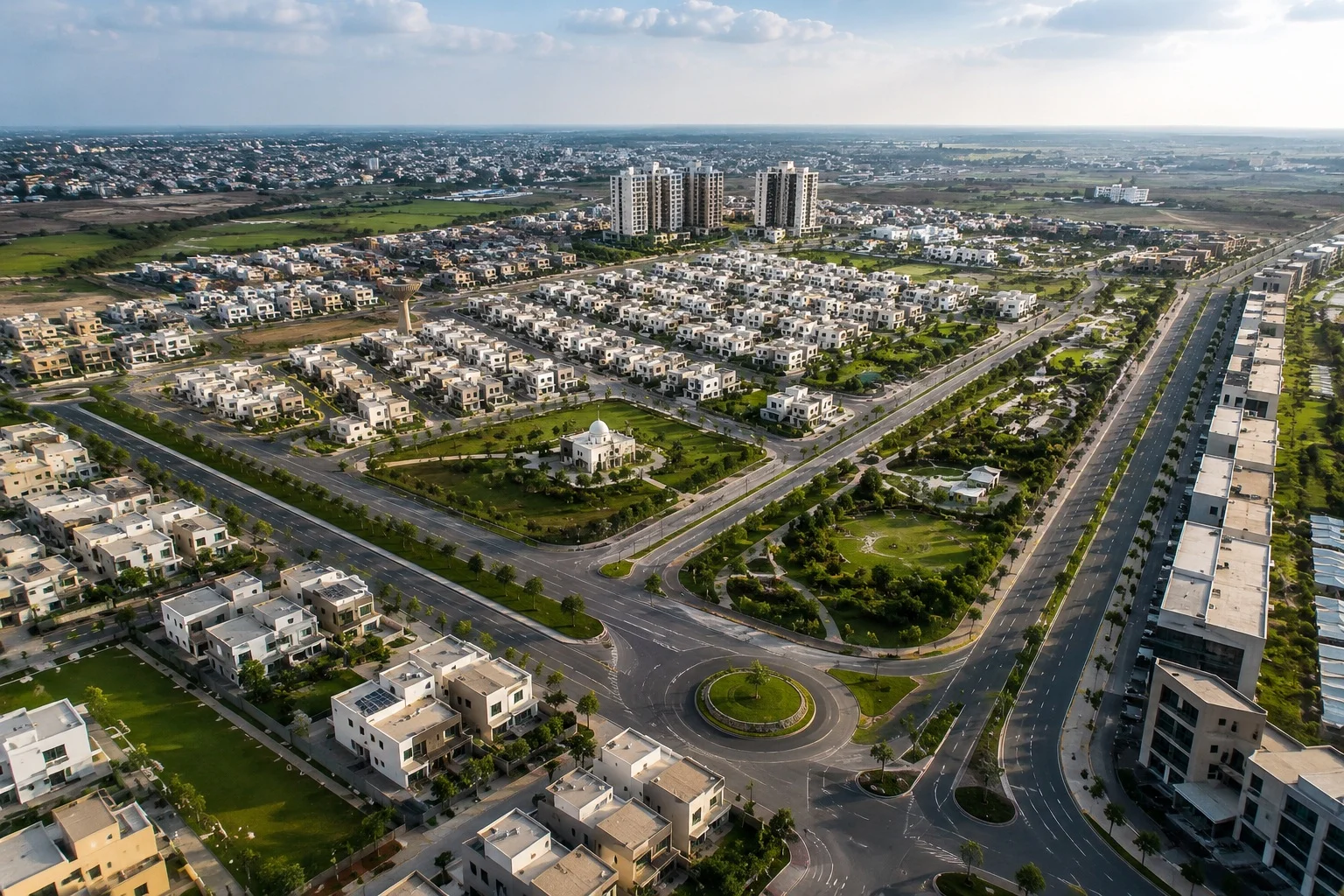
Housing societies continue to play a dominant role in Pakistan’s real estate growth. Developers are expanding projects on the outskirts of major cities, where land is relatively affordable and infrastructure development is ongoing.
Urban expansion has created new investment zones in areas surrounding Lahore, Faisalabad, and Islamabad. Improved road networks, industrial growth, and commercial hubs are increasing the value of previously underdeveloped regions.
Investors are now more focused on long-term appreciation potential rather than short-term flipping.
Investor Behavior After Tax Reforms
Tax reforms have significantly changed investor psychology. Earlier, many investors relied on speculative gains and undeclared transactions. Now, the focus has shifted toward:
- Long-term investment planning
- Legal property ownership
- Verified housing societies
- Rental income stability
- Risk reduction strategies
This behavioral shift is helping stabilize the market and reduce artificial price bubbles.
However, some small investors still find high taxes and regulatory procedures challenging, which can limit entry into the market.
Challenges Facing the Real Estate Sector
Despite positive reforms, several challenges remain in Pakistan’s real estate sector:
- High taxation on property transactions
- Complex regulatory procedures
- Fluctuating economic conditions
- Inflation pressure on construction costs
- Limited access to formal financing
These issues can slow down market momentum if not addressed properly. Simplifying tax structures and improving ease of doing business will be crucial for long-term growth.
Future Outlook of Pakistan’s Property Market
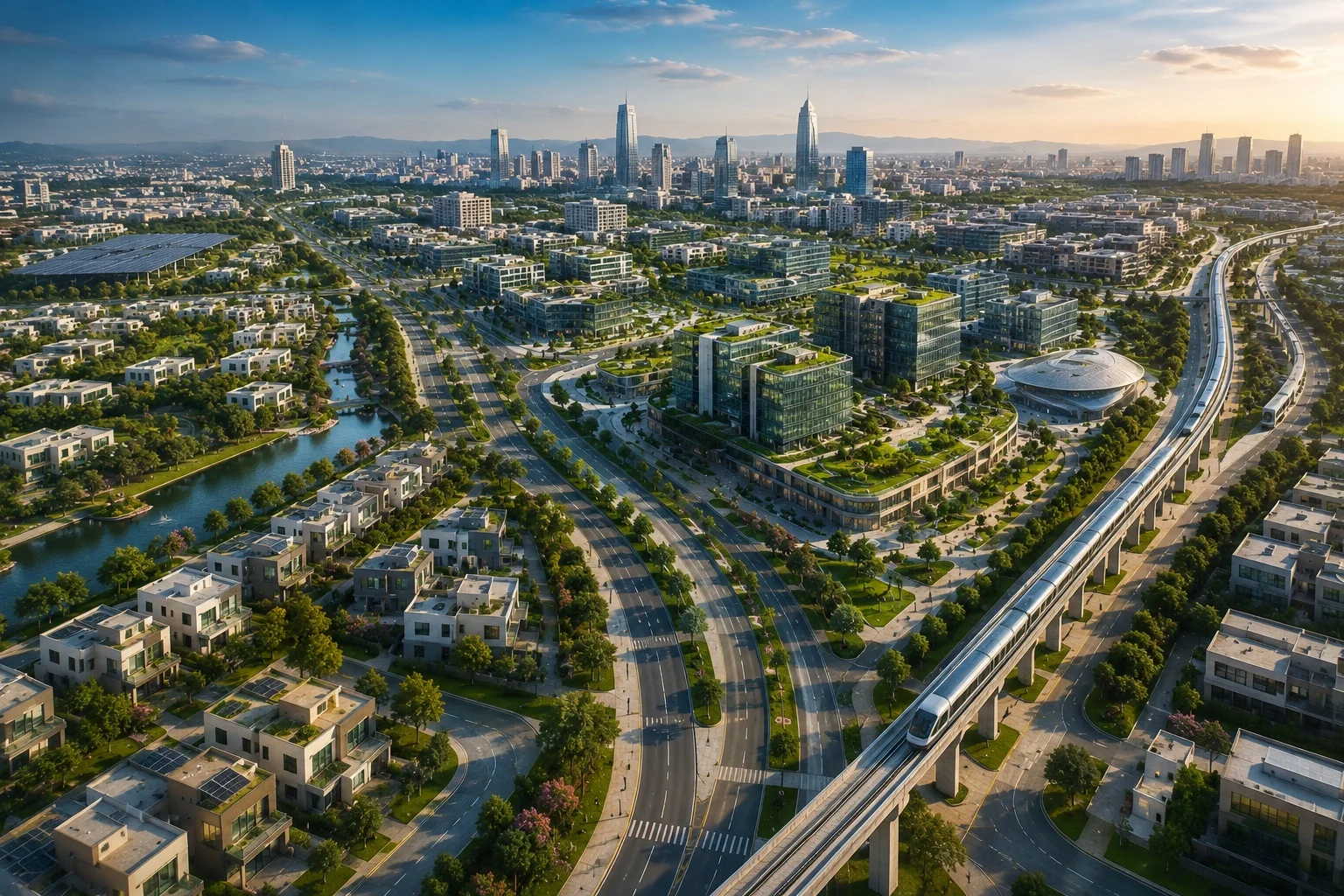
The future of real estate investment in Pakistan looks promising, especially as tax reforms continue to evolve. The market is expected to become more organized, data-driven, and transparent in the coming years.
Key future trends include:
- Increased digital property records
- Expansion of affordable housing projects
- Growth in commercial real estate investment
- Stronger overseas investor participation
- Development of smart and planned cities
If economic stability continues, Pakistan’s real estate sector could enter a strong growth cycle supported by both local and international investors.
Conclusion
Real estate investment trends in Pakistan after tax reforms reflect a major transformation in the property sector. While the short-term impact includes market adjustments and reduced speculation, the long-term effect is a more transparent, stable, and investment-friendly environment.
Investors are now focusing on documented transactions, sustainable projects, and long-term returns rather than quick profits. With continued policy improvements and infrastructure development, Pakistan’s real estate market is expected to remain a key pillar of economic growth in the coming years.
Want to know more? Check out FBR AI Tax Monitoring System in Pakistan: Impact on Property Investors
Like, share and comment: Facebook, Instagram, Youtube and TikTok.



Join The Discussion